
Subfloor & LVP Guide
Do You Need to Replace Your Subfloor Before Installing LVP? A Guide for East Texas Homeowners
You do not automatically need a new subfloor when you choose luxury vinyl plank. The decision depends on what is damaged, whether the floor has adequate support, and whether moisture problems have been corrected.
Flooring preparation guidance for Longview, Tyler, and East Texas homeowners.
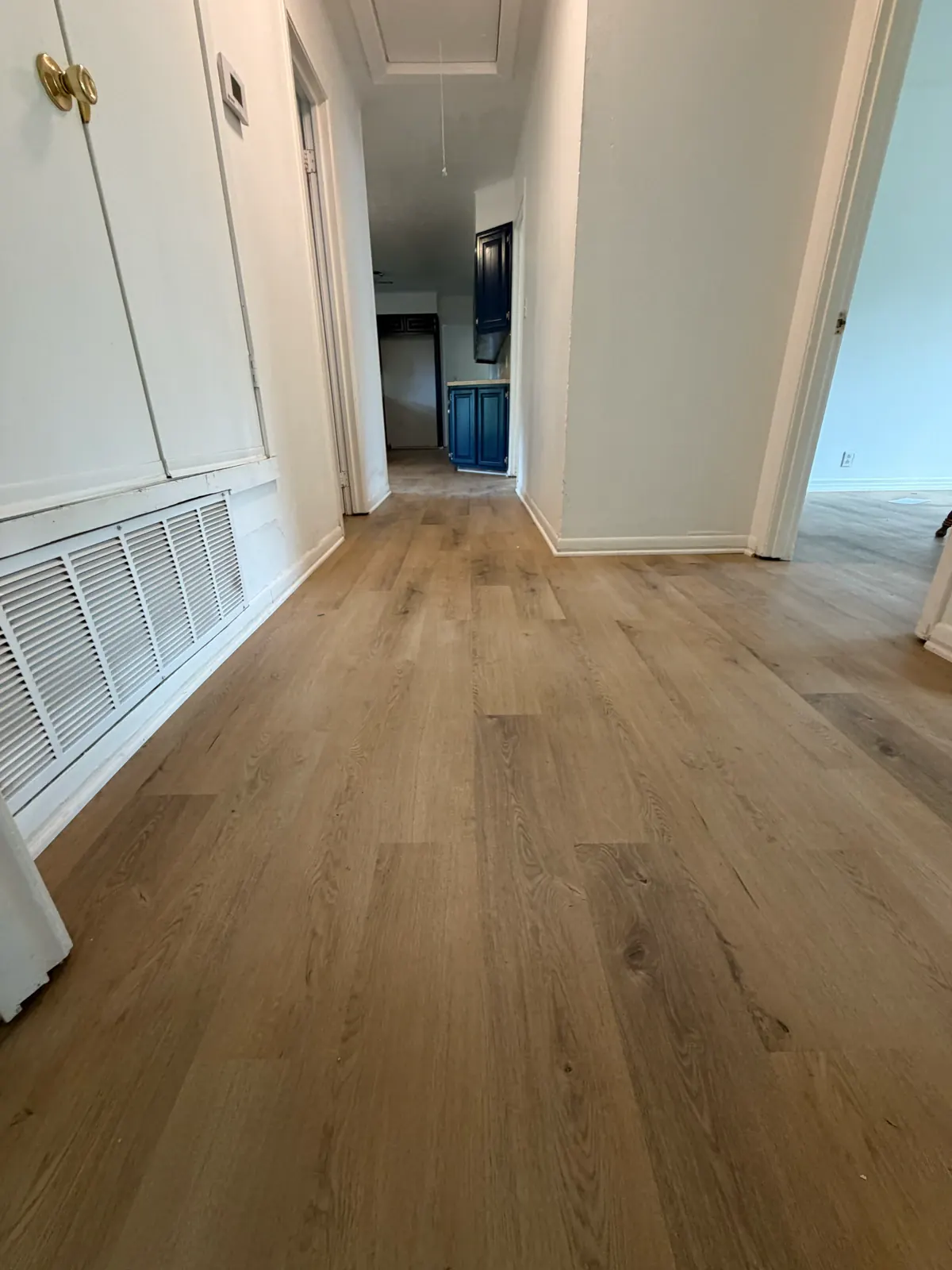
Subfloor replacement before LVP installation is necessary when the supporting deck has deteriorated beyond a sound repair. A stable floor with minor surface defects may need preparation instead. For homeowners in Longview, Tyler, and surrounding East Texas communities, the first step is finding the cause—not covering the symptoms with new planks.
LVP does not solve underlying water or structural problems. Not every soft spot calls for complete replacement, either. Here is how to separate those decisions before requesting an estimate.
What is a subfloor?
In a wood-framed floor, the subfloor is the structural deck, commonly plywood or oriented strand board (OSB), supported by joists. Underlayment is a separate layer above that deck when the flooring system requires it; it may provide a smoother surface or another approved function. Finished flooring is the visible walking surface, such as LVP.
A slab home may use concrete as the flooring substrate without a wood deck. These distinctions matter: damaged finish flooring, failed underlayment, and weakened structural panels require different solutions. APA explains the roles of subfloor and underlayment panels.
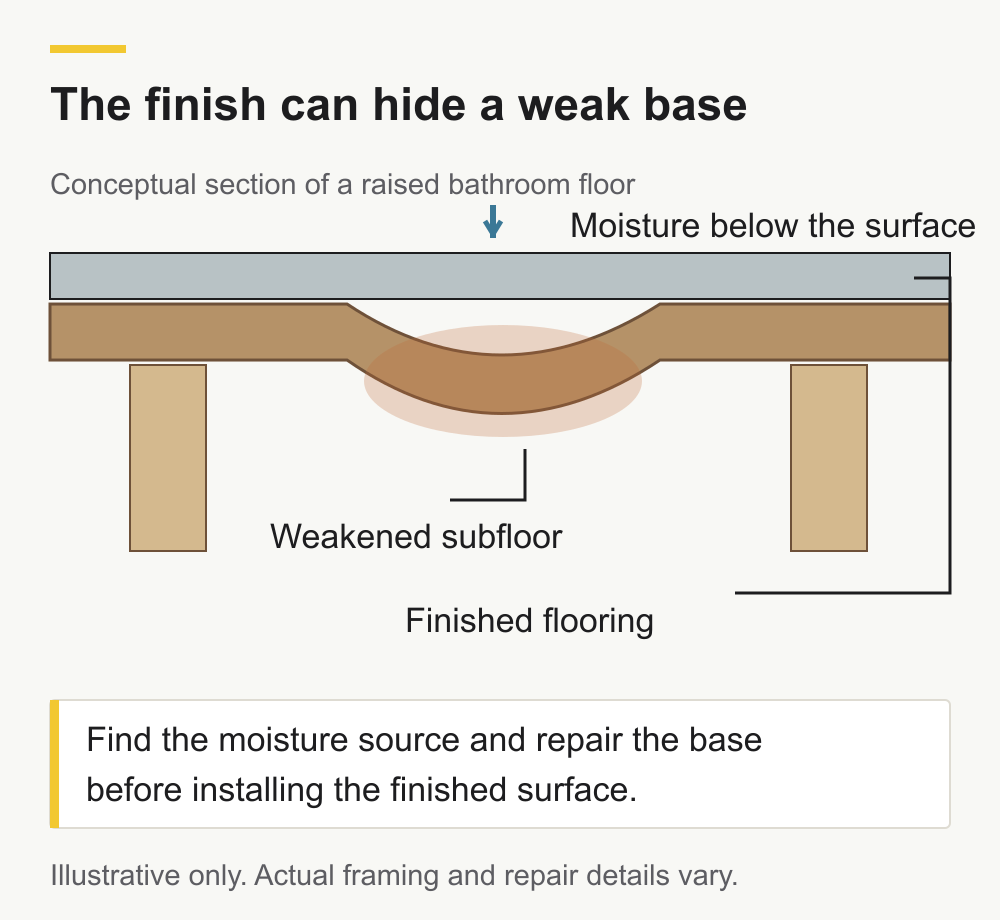
Signs your subfloor may need replacement
Signs of subfloor damage deserve inspection, but symptoms alone do not establish the repair scope:
- Soft spots or bounce: movement can come from the finish layer, loose panels, damaged decking, or inadequate support.
- Sagging: a dip may involve panels, joists, beams, or foundation movement. Patching the top will not correct failing support.
- Squeaking: friction at fasteners or adjoining components can create noise without rot. APA describes several possible squeak sources.
- Water damage: swollen edges, separating plywood layers, staining, or crumbling material warrant closer examination.
- Persistent odors: musty smells may point to dampness below the flooring, although odor cannot identify the damaged layer.
- Uneven flooring: ridges, dips, and moving joints need investigation before new planks are installed.
Trouble near a toilet or tub may be localized. Our soft bathroom floor guide explains why the leak source and surrounding material should be checked together.
Can LVP be installed over an existing subfloor?
Plywood and OSB
Often, yes—if the existing assembly is sound and the selected product permits it. Mannington's ADURA Rigid guide, for example, allows suitable OSB beneath that floating product. That permission does not apply automatically to every LVP or glue-down adhesive system. Loose panels, raised fasteners, rough joints, and deteriorated areas need appropriate correction first.
Concrete slabs
Concrete may also remain when its condition and moisture results meet the flooring requirements. Adhesive residue, surface contamination, cracks, and low areas may require preparation or further investigation. A dry-looking slab is not a substitute for the specified moisture testing.
Flatness describes humps and dips; level describes slope. An uneven subfloor for vinyl plank flooring must be assessed against the product's flatness requirements. Significant slope or ongoing movement needs investigation before surface correction.
Subfloor problems in East Texas homes
Pier-and-beam homes
A raised floor has wood decking and framing above a crawlspace. Plumbing leaks, damp soil, drainage problems, and humid air can expose those materials to moisture. Pier and beam subfloor replacement should include a review of the supports and the moisture source, rather than stopping at the visible damaged panel.
The Department of Energy explains how ground moisture affects crawlspaces. Moisture control may involve drainage, ground vapor control, or other work suited to the assembly. Simply opening more vents is not a universal fix: humid outdoor air can add moisture.
Slab foundations
A slab does not have the same wood deck to replace. The concern may be moisture migration, a plumbing leak, surface irregularities, or slab movement. A flooring installer should distinguish preparation from a condition requiring plumbing or foundation evaluation. The right approach depends on the house, not its ZIP code alone.
Repair vs. replacement: how much needs to come out?
Localized work may be sufficient when the problem is confined and surrounding panels and framing remain sound. That could mean correcting fastening or replacing a damaged section with properly supported edges and suitable structural material.
Pioneer's Longview flooring installation and partial subfloor replacement case study combined approximately 1,200 square feet of finished flooring with selected subfloor replacement in the dining room, kitchen, and bathroom areas. It illustrates how selected sections can be replaced without removing the entire subfloor. That square footage describes finished flooring, not the subfloor area replaced. The documented finish is wood-look plank; the exact material is not verified as LVP.
Larger sections may need replacement when deterioration extends across panels, plywood has separated, or the deck no longer supports loads properly. Damaged joists or beams require attention beyond panel replacement. APA's moisture-exposure guidance supports evaluating panel condition rather than assuming every wet panel is ruined. Drying does not restore decayed material.
If you need subfloor repair in Longview, TX, ask what can remain, what must be removed, and how concealed damage will be documented if removal reveals a larger problem.
What Affects Subfloor Replacement Costs?
A useful price starts with the affected square footage and the damaged materials. A localized repair may involve refastening sound panels or replacing a limited section. Extensive replacement involves more decking, removal, disposal, and labor, and may include structural repairs to damaged joists or beams. Replacement panel material and thickness must suit the floor assembly.
Access and foundation type also affect the work. A pier-and-beam home may require access beneath the wood deck; a concrete slab calls for different preparation. Cabinets, fixtures, and connected rooms can complicate access and finishing. Moisture damage may extend beyond the visible problem, while leak correction, drying, and crawlspace moisture control may add separate scopes. These findings help distinguish a focused repair from extensive replacement before a price is agreed upon.
Ask the estimate to distinguish known repairs from allowances or unresolved conditions and explain how additional work would be approved. Our Longview flooring cost guide and Tyler flooring cost guide cover the broader installation scope.
The LVP installation process
Follow the selected manufacturer's requirements for moisture control, underlayment, flatness, and expansion. Shaw's SPC installation guide illustrates why preparation and finishing belong in the installation plan.
- Inspect: review symptoms, foundation type, moisture conditions, room connections, and the chosen product's requirements.
- Remove existing flooring as needed: identify old materials before disturbing them and expose areas that need examination.
- Complete repairs: correct the moisture source and repair damaged decking or support before covering it.
- Prepare the surface: clean, correct irregularities with compatible materials, and verify moisture and flatness readiness.
- Install the planks: follow product instructions for conditioning, layout, locking or adhesive method, and expansion clearance.
- Finish the details: fit approved transitions, door trim, baseboards, and edges without restricting required floating-floor movement.
For LVP installation in Longview, TX, our installation planning guide covers room layout and finish details. Homeowners considering luxury vinyl plank flooring in Tyler, TX can review our Tyler flooring services.
Why proper preparation matters
Quality LVP still relies on the floor beneath it. Unsupported movement can stress joints, roughness can affect the finished surface, and trapped moisture can leave problems beneath water-resistant planks. Extra cushioning cannot stabilize weak framing. Use only approved underlayment; an attached pad does not automatically permit another layer.
Before selecting colors, establish whether the deck can stay, what preparation is required, and who will correct any water or support problem. Pioneer's flooring services include planning those details with the installation.
Subfloor and LVP FAQs
Does every soft spot mean I need a whole new subfloor?
No. A soft spot may involve a damaged finish layer, loose underlayment, a localized panel problem, or supporting framing. Inspection determines the cause and extent. A focused repair may be enough when the surrounding deck and supports are sound.
Can waterproof LVP go over a damp subfloor?
No. A waterproof plank is not a moisture-control system. Stop leaks, address the source of dampness, and verify that the substrate meets the selected flooring manufacturer's moisture requirements before covering it.
Can I add underlayment to fix an uneven subfloor for vinyl plank flooring?
Underlayment cannot restore rotten panels or weak framing. A sound surface may need approved patching or panel underlayment, but extra soft padding is not a substitute for preparation. Use only materials permitted by the selected LVP manufacturer.
What should I share when requesting a flooring estimate?
Share the rooms involved, your foundation type if known, visible damage, any leak history, and the flooring you are considering. Photos help explain the concern, but concealed conditions and moisture readiness still require an on-site review.
Your next step
Not Sure If Your Subfloor Needs Replacing?
Pioneer Construction helps homeowners across East Texas with subfloor repairs, replacements, and luxury vinyl plank flooring installation. Schedule an estimate to discuss your project.