
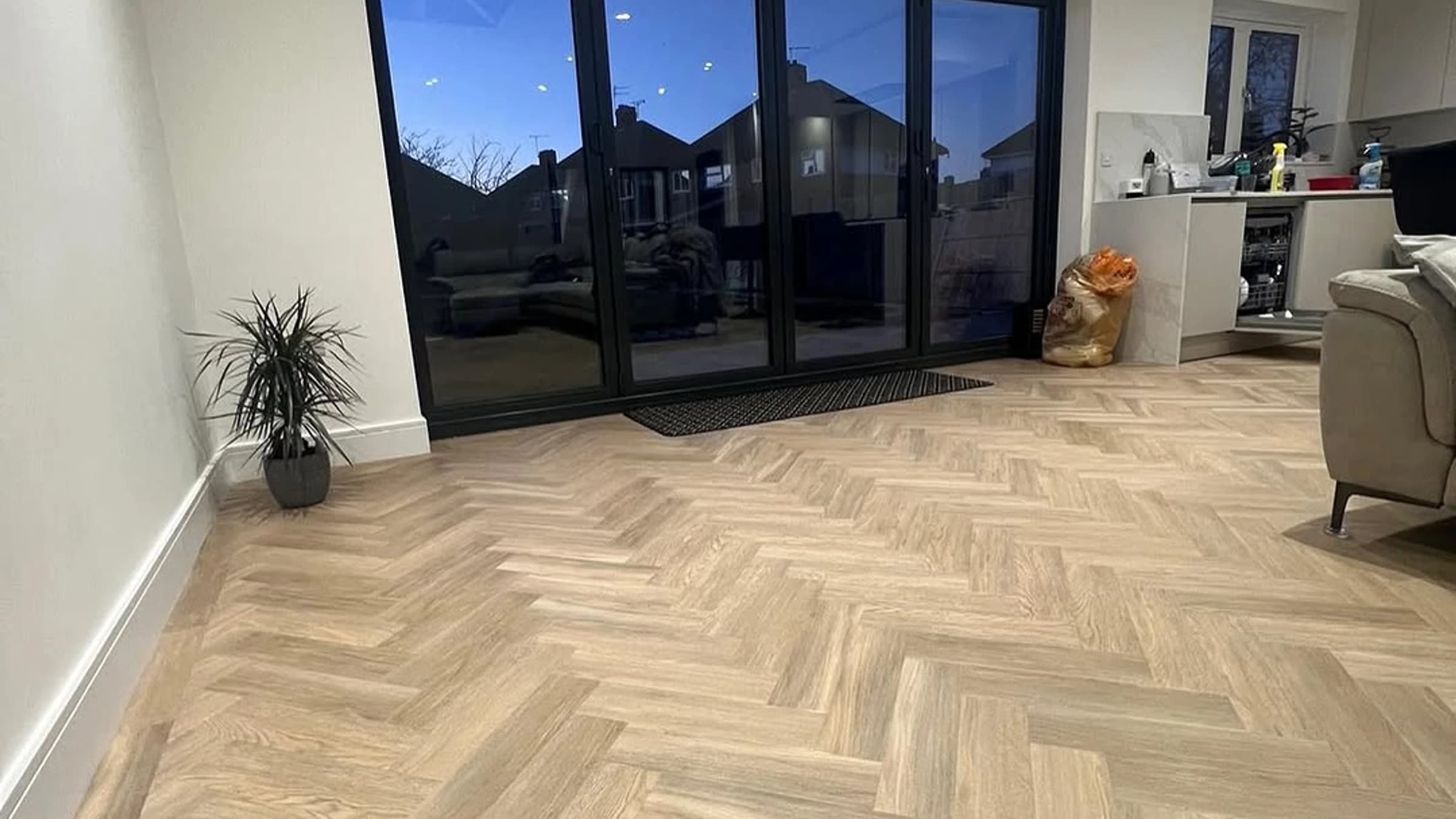
Homeowners comparing flooring quotes usually want a simple price per square foot. That number can be useful for early planning, but it does not tell the whole story. A real flooring estimate has to account for the existing floor, the room layout, the material, the subfloor, the trim, and how the new floor will meet nearby rooms.
Pioneer Construction is a remodeling contractor, not a flooring store. That matters when the flooring is part of real home improvement work: bathroom updates, kitchen remodeling, door transitions, baseboards, subfloor repairs, removal, disposal, and finished details that need to look right when the project is done.
What affects flooring installation cost?
The biggest cost drivers are the ones that change the labor and prep, not just the material. Two homes can have the same amount of flooring on paper but very different project scopes. A clean rectangular bedroom with a flat subfloor is different from a kitchen with cabinets, appliances, transitions, uneven slab areas, and old flooring that needs to be removed.
When Pioneer Construction reviews a flooring project, the conversation starts with the rooms involved, the existing surface, visible damage, height changes, moisture exposure, trim details, and whether the flooring connects to a broader remodel. Homeowners can also review the flooring installation in Longview, TX service page for the types of planning details that belong in the scope.
- Existing flooring type and how difficult it is to remove
- Room size, number of rooms, hallways, closets, and doorways
- Subfloor flatness, soft spots, moisture damage, or slab issues
- Floor height changes between rooms
- Baseboards, shoe molding, casing cuts, thresholds, and transitions
- Toilets, vanities, appliances, cabinets, islands, and built-ins
- Moisture-prone areas such as bathrooms, kitchens, laundry rooms, and entries
- Cleanup, haul-off, and whether the project ties into a larger remodel
Material type: LVP, laminate, tile, engineered wood, and hardwood
Material choice affects product cost, installation method, prep, transitions, maintenance, and where the flooring makes sense. LVP, laminate, tile, engineered wood, and hardwood all have different strengths. The right choice depends on the room, the household, the subfloor, and how much moisture the area may see.
LVP
Luxury vinyl plank is common for busy homes because many products are durable, cleanable, and better suited to occasional moisture than some wood-based products. Product quality, wear layer, plank thickness, stair details, and transitions can change the full scope.
Laminate
Laminate can be a practical choice in dry living areas, bedrooms, and hallways when the subfloor is flat and moisture exposure is limited. It needs careful planning around kitchens, bathrooms, entries, and places where water is likely.
Tile
Tile can work well in bathrooms, kitchens, laundry rooms, and entries, but it usually requires more prep, layout planning, grout decisions, cuts, trim, and attention to substrate condition.
Engineered wood
Engineered wood can give homeowners a warmer wood look while offering more dimensional stability than solid hardwood in some situations. It still needs the right subfloor, moisture review, and installation method.
Hardwood
Hardwood can be beautiful, but it is more sensitive to moisture, movement, finish expectations, and installation conditions. It should be planned carefully in East Texas homes where room use and humidity matter.
Floor removal and disposal
Removing old flooring can be simple or time-consuming depending on what is there now. Carpet and pad, floating laminate, glued-down vinyl, tile, old adhesive, tack strips, underlayment, and damaged layers all affect labor and disposal. Tile removal can be especially messy when the old installation is bonded tightly or layered over older surfaces.
Disposal also matters. A complete flooring scope should be clear about what gets removed, what gets hauled away, what gets protected during demolition, and what condition the room needs to be in before the new flooring starts.
Subfloor condition and prep work
New flooring is only as reliable as the surface underneath it. Soft spots, old water damage, uneven slab areas, loose panels, squeaks, leftover adhesive, high seams, or low spots may need correction before installation. This is one reason an estimate based only on square footage can miss important work.
Prep can include cleaning, scraping, leveling, fastening, replacing damaged areas, adjusting underlayment, or reviewing moisture concerns. Those steps are not glamorous, but they protect the finished result.
Room size and layout complexity
Larger rooms generally use more material and labor, but layout complexity can matter just as much. Hallways, closets, angled walls, doorways, stairs, fireplaces, cabinets, islands, built-ins, and multiple adjoining rooms create more cuts and transitions.
A flooring project that runs through several connected spaces also needs a plan for direction, seams, expansion gaps, thresholds, and where the new floor stops. Those decisions affect both the look and the estimate.
Planning to replace flooring in Longview, Tyler, or nearby East Texas? Pioneer Construction can review the existing floors, check subfloor and transition details, and help you plan the right flooring installation for your home.
Bathrooms, kitchens, and moisture-prone areas
Bathrooms, kitchens, laundry rooms, and entries need extra attention because moisture, fixtures, cabinets, appliances, and daily traffic can affect the best flooring choice. Bathroom flooring may involve toilet removal, vanity clearances, old leaks, soft subfloor, tile transitions, or waterproofing details tied to a larger bathroom remodeling project.
If the bathroom scope includes a shower, review how the floor connects to the wet area. The guide to custom tile shower installation in Longview, TX explains why waterproofing, slope, tile layout, and hidden conditions need to be discussed before finished materials go in.
Kitchen flooring has its own details. Appliances may need to move, cabinets and islands can create cut lines, and finished floor height can affect dishwasher clearance, toe kicks, thresholds, and pantry or hallway transitions. If the flooring is part of a larger kitchen update, the kitchen remodeling in Longview, TX scope should be planned together instead of priced as an isolated flooring swap. The kitchen remodel cost guide explains the other layout, cabinet, countertop, backsplash, lighting, plumbing, electrical, and appliance details that can affect the estimate.
Trim, baseboards, thresholds, and transitions
Finished edges are a big part of whether new flooring looks intentional. Baseboards, shoe molding, casing cuts, thresholds, reducer strips, stair noses, tile edges, and transitions between rooms all affect the finished detail. These items are easy to overlook in a quick quote.
Sometimes existing baseboards can stay. Sometimes they need to be removed and reinstalled. Sometimes replacement trim gives the cleaner result. The estimate should make that clear so the homeowner is not surprised after the floor is already down.
Why online square-foot prices can be misleading
Online square-foot pricing often assumes a clean, simple installation. It may not include removal, disposal, furniture moving, appliance handling, toilets, baseboards, trim, subfloor prep, moisture concerns, floor leveling, transitions, stairs, complex cuts, or the project management needed when flooring connects to a remodel.
Square-foot ranges can help homeowners begin a budget conversation, but they should not be treated as an official price for a specific home. The more a flooring project touches bathrooms, kitchens, old damage, uneven subfloors, or finished carpentry details, the more important an in-home review becomes.
When it makes sense to request an in-home estimate
It makes sense to request an in-home estimate when you are comparing multiple flooring materials, replacing flooring in more than one room, removing tile or glued flooring, seeing soft spots or uneven areas, or planning flooring as part of a bathroom or kitchen remodel.
An in-home estimate also helps when floor height matters. Transitions at bedrooms, hallways, bathrooms, kitchens, exterior doors, stairs, and existing tile can affect product choice and installation details. Those conditions are hard to judge from a phone call or a generic online calculator.
Plan your Longview flooring estimate
If you are planning new floors in Longview, Tyler, or nearby East Texas, Pioneer Construction can help you compare material options, review the existing floor, look for prep issues, and plan flooring as part of a practical remodel instead of a one-size-fits-all product sale.
Start by sending a project request through the estimate request page. Share the rooms involved, the flooring you are considering, and anything you already know about the existing floor.