
Bathroom Repair Guide
Soft Bathroom Floor in Tyler or Longview? Here’s What It Usually Means
A soft spot near the toilet, tub, shower, vanity, or bathroom doorway needs investigation before new flooring goes down. Surface symptoms alone do not show the cause or how much of the room needs work.
Helpful repair guidance for Tyler, Longview, and nearby East Texas homeowners.
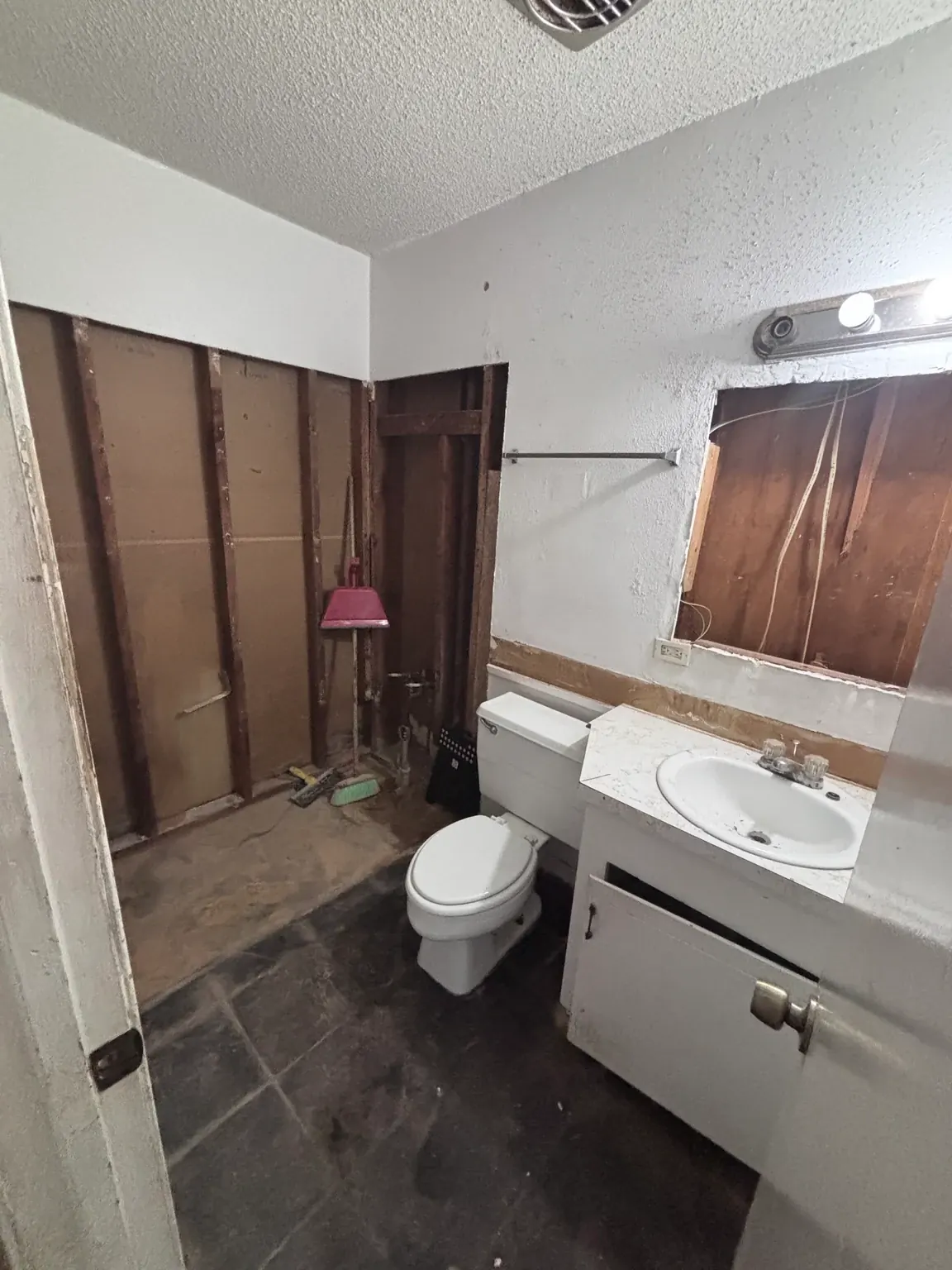
Homeowners usually notice the problem in a simple way: one step feels spongy, the toilet rocks slightly, tile starts cracking, or the floor dips near the shower. Sometimes the finished flooring looks normal, but the layer underneath is wet, rotted, or no longer strong enough to carry the room the way it should.
That is why a soft bathroom floor should be checked before it is covered with new flooring. Pioneer Construction helps homeowners looking for bathroom subfloor repair in Tyler, TX, subfloor repair in Longview, TX, and practical floor repair across East Texas understand what is damaged, where the moisture came from, and whether the repair should stay focused or become part of a larger bathroom remodel.
Start With Investigation, Then Choose the Scope
- Investigate first. Establish the floor construction, source of movement or moisture, and extent of damage. A soft spot alone does not confirm rot or a failed shower.
- Keep repair focused when possible. If the cause can be corrected and damage is isolated, repair may stay limited to the affected support, subfloor, flooring, and any necessary fixture work.
- Discuss broader remodeling when the work connects. Rebuilding a leaking shower or repairing several affected areas may require coordinated work. Separate that necessary work from optional layout and finish upgrades before approving the scope.
Common Signs Your Bathroom Subfloor May Be Damaged
Subfloor damage is not always obvious from the surface. Finished tile, LVP, sheet flooring, or trim can hide the problem until the floor starts moving or the damage spreads. Watch for these signs:
- Soft, spongy, or dipping areas near the toilet, tub, shower, vanity, or doorway
- Movement underfoot when you step on a specific area
- Cracked tile, loose grout, or flooring that separates at the seams
- A musty smell that does not go away after normal cleaning
- A toilet that rocks, shifts, or no longer feels tight to the floor
- Staining, swelling, or dark areas near the toilet, tub, or shower
- Uneven areas where the finished floor looks flat but feels weak underneath
What Causes a Bathroom Floor to Feel Soft?
Bathroom floor water damage usually starts with moisture that gets below the finished surface. A leaking toilet, failed wax ring, slow plumbing leak, tub overflow, shower leak, or loose connection can soak the floor over time. Poor ventilation can also keep a bathroom damp longer than it should be.
Shower and tub areas deserve special attention. Failed waterproofing, cracked grout, loose tile, an old shower pan, or a tub edge that was not sealed correctly can send water into places homeowners cannot see. In older bathrooms, new flooring may have been installed over previous damage, which hides the soft area until the structure underneath gets worse.
If the moisture appears tied to a shower, the guide on what prevents shower leaks behind the walls explains why backing, pans, drains, corners, niches, benches, and slope matter before new finishes go in.
Why You Should Not Just Cover It With New Flooring
If you are planning new vinyl planks, our guide to subfloor replacement before LVP installation explains when an existing floor base can remain, when a local repair may be enough, and when larger damaged sections need replacement.
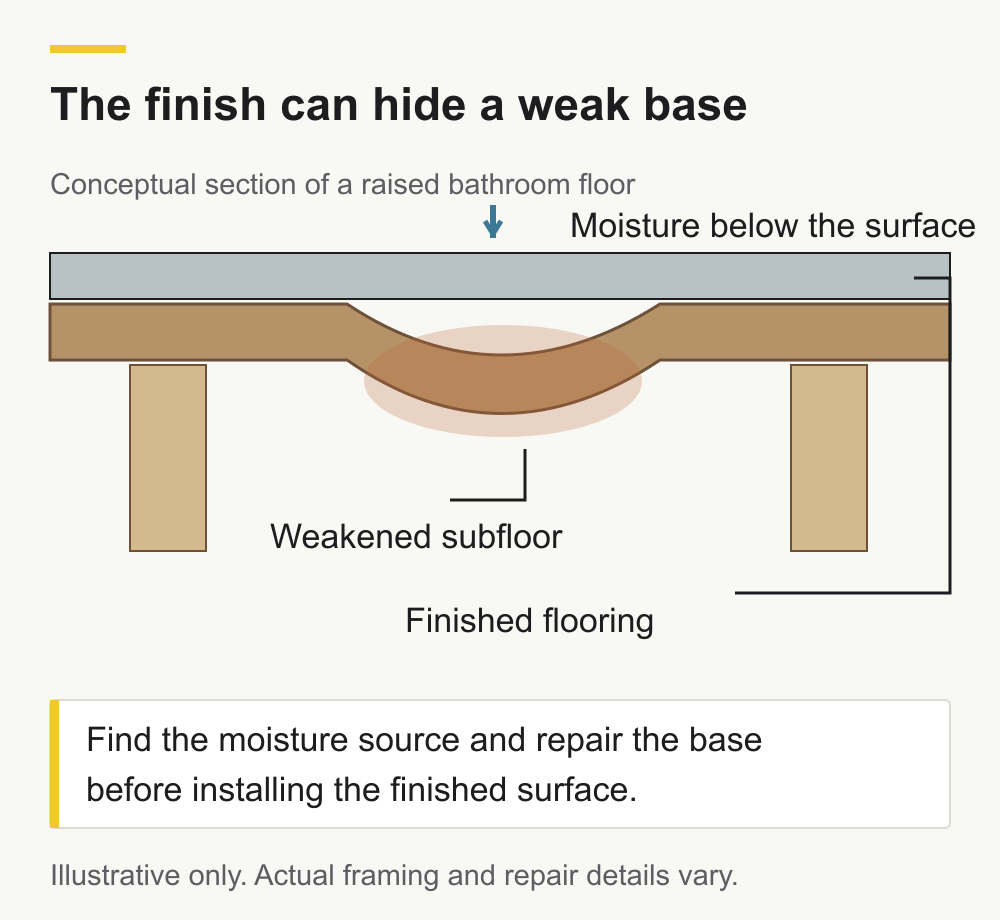
New LVP, tile, or sheet flooring can make a bathroom look better, but it does not fix a damaged subfloor. If the wood underneath is soft or rotted, the new floor is being installed over a weak base. That can lead to loose tile, separated seams, uneven transitions, toilet movement, and a repair that costs more later.
Covering the area can also trap moisture and hide rot. A clean finished floor is the last step, not the first one. Before any new surface goes down, the damaged material should be exposed, the source of moisture should be reviewed, and rotted subfloor repair should be handled correctly. For broader flooring planning, review Pioneer Construction's flooring service page, Tyler flooring installation guide, or Longview flooring installation guide.
How Bathroom Subfloor Repair Usually Works
The right repair depends on the bathroom, the finished flooring, and how far the damage has traveled. A small soft spot near a toilet is different from bathroom floor water damage that runs under a shower, vanity, wall, or doorway.
Most soft bathroom floor repair follows a practical sequence:
- Inspect the soft area and nearby wet zones.
- Identify and correct the source of moisture where possible.
- Remove damaged flooring or fixtures as needed to expose the problem.
- Cut out rotted subfloor sections instead of covering them.
- Repair framing, blocking, or support details if the damage reached deeper.
- Install new subfloor material and prepare the surface for the finished floor.
- Install new flooring or continue with the bathroom remodel scope.
The finished surface should be installed only after the floor is solid again. Depending on the room, that may mean new bathroom flooring, reinstalling a toilet, updating trim, or continuing into a larger remodel plan.
When Subfloor Repair Turns Into a Bathroom Remodel
Some repairs stay focused. Broader remodeling is worth discussing when correcting the cause requires rebuilding the shower or tub area, damage extends through connected parts of the room, or the homeowner already wants layout and fixture changes. An older fixture or a soft spot alone is not a reason to replace the whole bathroom.
A bathroom remodel after water damage may include new shower or tub work, flooring, trim, vanity-area updates, plumbing fixtures, and better finish details. If the moisture came from the shower, the project may become a shower remodel water damage repair that includes wall prep, waterproofing, tile, glass, or fixture changes. Homeowners can compare those options on the bathroom remodeling service page, the custom shower service page, the Tyler bathroom remodeling guide, and the Longview bathroom remodeling guide.
Bathroom Subfloor Repair in Tyler, Longview, and East Texas
Pioneer Construction serves Tyler, Longview, and surrounding East Texas communities with bathroom remodeling, custom showers, flooring, and related repair work. If your bathroom floor feels soft, uneven, or damaged, the next step is to understand what is happening under the finished surface before choosing the final flooring or remodel scope.
The repair may be straightforward. It may also uncover a leak or failed waterproofing detail that needs a larger plan. Either way, a clear inspection and estimate help you avoid guessing.
FAQs
Bathroom Subfloor Repair FAQs
Is a soft bathroom floor dangerous?
A soft bathroom floor can be a warning sign that moisture has damaged the subfloor or nearby framing. It should be inspected before the weak area grows, the toilet starts moving, tile cracks further, or the floor becomes less stable under normal use.
Can I install new flooring over a soft bathroom floor?
No. New LVP, tile, or sheet flooring over a soft bathroom floor does not repair the damaged subfloor. It can hide moisture, trap rot, and make the finished floor fail sooner. The damaged area and the source of the moisture need to be addressed first.
What causes a bathroom subfloor to rot?
Common causes include leaking toilets, old wax rings, shower or tub leaks, failed waterproofing, plumbing leaks, poor ventilation, and previous flooring installed over damage that was never repaired.
Should I repair the subfloor or remodel the bathroom?
Start with an inspection to identify the cause and extent. A focused repair may be enough when the source can be corrected and damage is isolated. A broader remodel may make sense when repairs require rebuilding the shower or affect several connected parts of the room, or when the homeowner also wants layout and fixture changes. A soft spot alone does not establish that a full remodel is needed.
Your next step
Need help with a soft bathroom floor?
If your bathroom floor feels soft, uneven, or damaged, Pioneer Construction can inspect the issue, explain what is going on, and provide a clear estimate for the repair or remodel. Request an estimate today.