
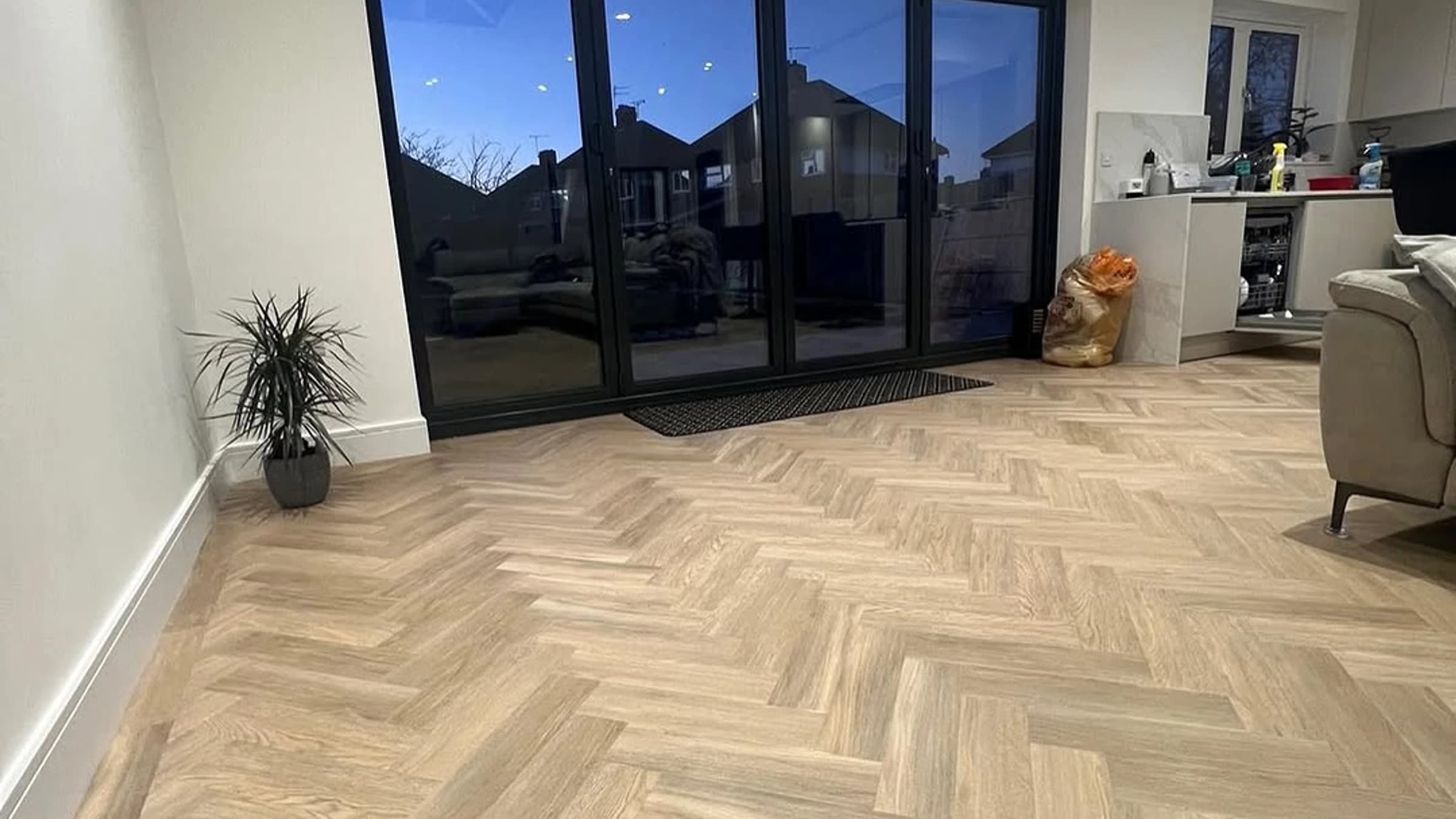
Homeowners often search for LVP flooring in Longview, TX because they want a floor that looks cleaner than old carpet or worn sheet vinyl without taking on the maintenance concerns of some wood products. Luxury vinyl plank can be a strong option, but the product is only part of the job.
Pioneer Construction installs flooring as part of real remodeling work. That means the estimate has to account for the existing floor, subfloor, room layout, trim, thresholds, kitchens, bathrooms, moisture-prone areas, and the finish details that make the floor look built into the home instead of dropped on top of it.
What is luxury vinyl plank flooring?
Luxury vinyl plank is a manufactured flooring product made to resemble wood planks while offering practical durability and water resistance. Most homeowners compare it because they want a warmer wood-look floor in bedrooms, hallways, living spaces, kitchens, laundry areas, or other parts of the home.
LVP is not all the same. Product thickness, wear layer, core type, texture, edge profile, installation method, and manufacturer requirements can all affect how the floor performs. A good installation starts by matching the product to the room and the condition of the home, not just picking a color from a sample board.
Why Longview and East Texas homeowners choose LVP
Many Longview and East Texas homeowners choose LVP because it can handle busy households, pets, everyday spills, and frequent cleaning better than some other flooring options. It can also work well when homeowners want a consistent surface through several connected rooms.
The phrase best flooring for East Texas homes depends on the home. LVP is often a practical answer when the homeowner wants water resistant flooring in Longview, TX, but the subfloor, room use, sunlight, furniture, and transitions still matter. Homeowners comparing overall project scope can also review the guide to flooring installation cost in Longview, TX.
Where LVP works best in the home
LVP often works well in living rooms, bedrooms, hallways, closets, entry areas, kitchens, laundry rooms, and other high-use spaces where a durable floor matters. It can also help connect rooms visually when homeowners want fewer flooring changes between spaces.
The best locations depend on the product and the existing conditions. Some homes have uneven slabs, old adhesive, previous water damage, floor height changes, or transitions that need attention before luxury vinyl plank flooring installation in Longview, TX can be planned clearly.
LVP in kitchens, bathrooms, laundry rooms, and living areas
Kitchens and laundry rooms are common places to consider LVP because spills and cleaning are part of daily life. Kitchen flooring may involve appliance movement, cabinet edges, toe kicks, pantry transitions, islands, dishwasher clearance, and the broader kitchen remodeling in Longview, TX scope.
Bathroom flooring needs the same practical attention. Toilets, vanities, old leaks, soft subfloor, trim at tubs or showers, and wet-area transitions can all affect the job. If LVP is part of a larger bathroom remodeling project, the flooring should be planned with the room instead of treated as a separate product choice.
Living areas and bedrooms may seem simpler, but furniture, long runs, doorways, closets, fireplace edges, and hallway connections can still affect layout and transitions. The installation should match the way the rooms actually connect.
What has to be checked before installation
Before vinyl plank flooring installation in Longview, TX, the existing conditions need to be reviewed. A quote based only on square footage can miss the details that determine whether the finished floor looks clean.
- Existing flooring type and removal needs
- Subfloor flatness, movement, soft spots, and moisture concerns
- Doorways, closets, hallways, and connected room layouts
- Toilets, vanities, appliances, cabinets, islands, and built-ins
- Baseboards, shoe molding, casing cuts, thresholds, and reducer strips
- Floor height changes at tile, carpet, exterior doors, and stairs
Why subfloor condition matters
LVP is not magic. It can be durable and practical, but it will not fix a bad surface underneath it. Uneven areas, soft spots, loose panels, old adhesive, damaged underlayment, moisture problems, or slab issues can affect how the floor locks together and how it looks after installation.
Subfloor prep may include scraping, cleaning, fastening, replacing damaged areas, addressing low spots, reviewing moisture concerns, or planning underlayment correctly. Those steps are easy to ignore when comparing material prices, but they are often what separate a clean installation from one that looks cheap.
Planning to install luxury vinyl plank flooring in Longview, Tyler, or nearby East Texas? Pioneer Construction can review your existing floors, check subfloor and transition details, and help you plan an LVP installation that fits the space.
Floating vs glue-down LVP
Floating LVP locks together and rests over the prepared surface, usually with room for expansion at the edges. It is common in residential work, but it still depends on a flat, clean, stable subfloor and properly planned transitions.
Glue-down LVP is adhered to the surface and may be considered for certain rooms, products, or project conditions. It requires careful surface prep because imperfections can telegraph through the finished floor. The right method depends on product requirements, room use, subfloor condition, and the broader remodel.
Trim, baseboards, thresholds, and transitions
The finished edges often decide whether LVP looks like part of the home. Baseboards, shoe molding, casing cuts, door jambs, thresholds, reducer strips, stair edges, and transitions to tile or carpet should be planned before the installation starts.
Some projects can reuse existing baseboards. Others look better with new trim or carefully planned shoe molding. If the flooring runs from a living area into a kitchen, bathroom, hallway, or bedroom, those transitions need a clean plan.
Common mistakes that make LVP look cheap
LVP can look sharp when the prep and finish work are handled well. It can also look cheap when the job is rushed, when the trim is sloppy, or when the floor is installed over problems that should have been corrected first.
- Installing over an uneven surface and expecting the plank to hide it
- Ignoring floor height changes between rooms
- Using poor transition pieces or placing them without a clean plan
- Leaving rough trim cuts around doors, casing, tubs, or cabinets
- Choosing the cheapest plank without checking wear layer, thickness, and room use
- Treating bathroom or kitchen flooring like a simple living room installation
How LVP compares to laminate and tile
Homeowners often compare LVP, laminate, and tile because each can make sense in different rooms. The right choice should account for durability, moisture, comfort, maintenance, material quality, installation method, subfloor condition, and how the floor connects to nearby rooms.
LVP vs laminate
LVP is often a stronger fit where water resistance matters. Laminate can work well in dry rooms, but many laminate products are more sensitive to moisture and swelling at seams.
LVP vs tile
Tile can be excellent in bathrooms, laundry rooms, and entries, but it usually needs more prep, layout, grout, and substrate attention. LVP can be more forgiving underfoot, but it still needs a sound subfloor and careful transitions.
LVP as part of remodeling
When flooring connects to kitchen or bathroom work, the best choice depends on cabinets, fixtures, moisture, trim, doors, thresholds, and how the finished rooms meet each other.
When to request a flooring estimate
Request an estimate when you are comparing LVP products, replacing flooring in multiple rooms, removing old flooring, seeing uneven or soft areas, planning work around kitchens or bathrooms, or trying to understand how transitions and trim will be handled.
Homeowners should not choose flooring based on material price alone. The best estimate looks at the whole project: removal, prep, product fit, layout, trim, thresholds, transitions, and the finished details that affect daily use. Start with Pioneer Construction's flooring installation in Longview, TX page if you are still comparing options.
Plan your LVP flooring project
If you are considering luxury vinyl plank flooring in Longview, Tyler, or nearby East Texas, Pioneer Construction can review the existing space, talk through product fit, check subfloor and transition details, and help you plan flooring that works with the rest of the remodel.
Send a project request through the estimate request page and share the rooms involved, what flooring you are considering, and whether the project connects to bathroom, kitchen, or other remodeling work.