
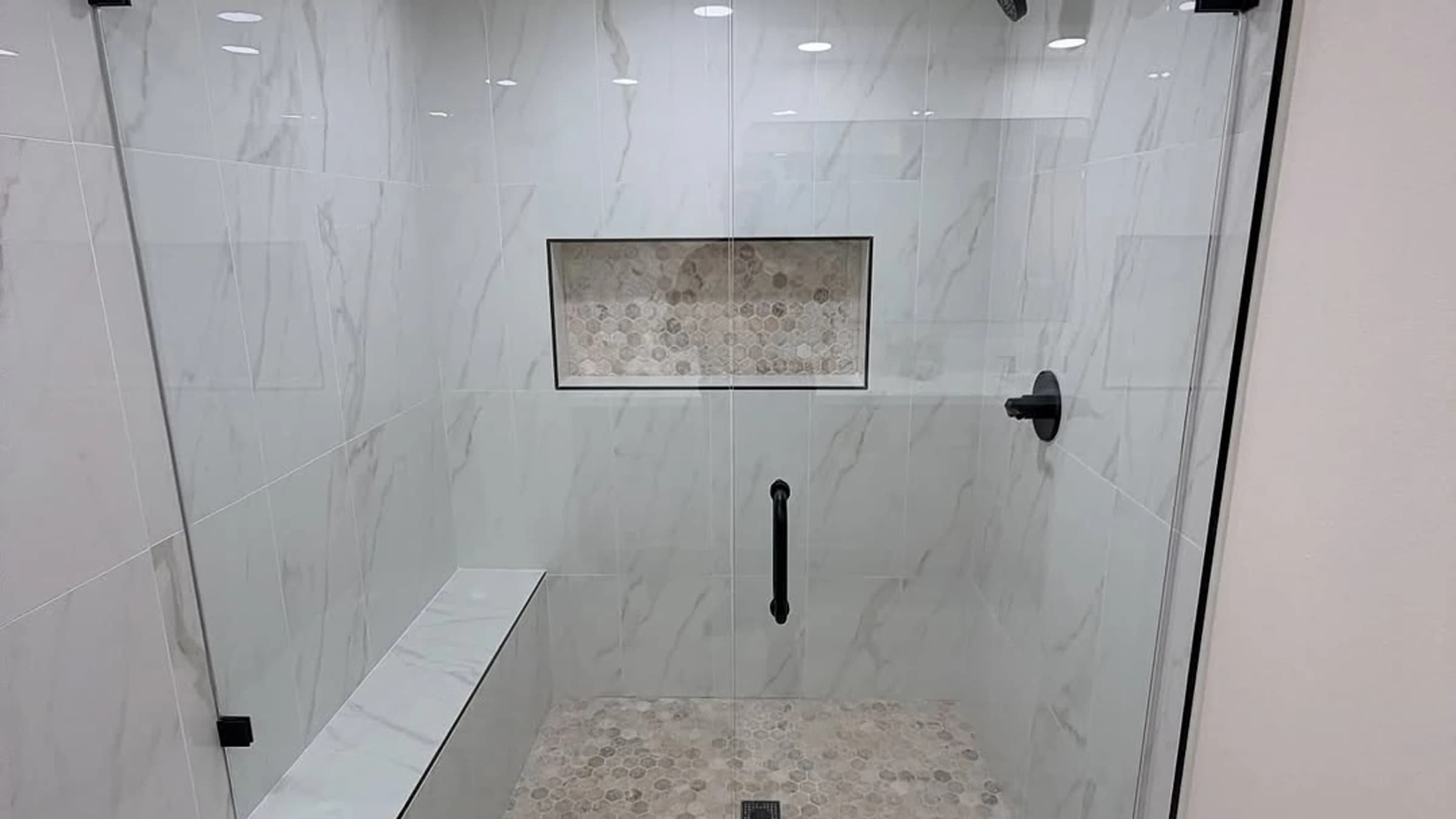
Tile shower waterproofing Tyler TX homeowners ask about usually starts with a simple misunderstanding. Tile looks hard. Grout looks sealed. The finished shower may look clean and solid. But tile and grout are not the waterproofing system.
The real protection is behind the visible finish: wall backing, waterproofing, shower pan details, drain connection, slope, seams, corners, niches, benches, and penetrations around fixtures. Those details decide whether the shower handles daily water or starts leaking into the wall and floor.
That matters when homeowners in Tyler, Longview, and nearby East Texas compare shower remodel quotes. A cheap number may look attractive, but if waterproofing is vague or missing, the price is not covering the work that protects the bathroom.
Why Tile and Grout Are Not Enough
Tile and grout help shed water, but they are not the primary moisture protection. Grout can absorb moisture. Caulk lines can split or pull away. Corners, transitions, fixture openings, and horizontal surfaces can all become weak points over time.
Niches and benches need extra attention because they create more seams, more corners, and more surfaces where water can sit. A shower niche that looks sharp from the outside can still become a leak point if the framing, slope, and waterproofing behind it are handled poorly.
Water damage often starts where homeowners cannot see it. The first sign may be a musty smell, swollen base trim, loose tile, a soft floor, or a stain on the ceiling below. By then, the problem may have been active for a while.
What Shower Waterproofing Actually Does
Shower waterproofing creates a protected layer behind the finished tile or wall surface. The goal is simple: water should move toward the drain, not into the walls, subfloor, framing, or nearby rooms.
A properly planned shower includes the right wall backing, a waterproofing method suited to the project, shower pan protection, a drain connection that works with the pan, sealed corners and seams, and careful handling around valve and fixture penetrations. The shower floor also needs slope so water has a controlled path to the drain.
If you are planning a custom shower Tyler TX project, Pioneer Construction's Tyler custom shower page is a good place to review how layout, tile, glass, fixtures, and waterproofing fit into the same scope.
Where Bad Shower Waterproofing Usually Fails
Shower leaks usually do not start in the middle of a flat tile wall. They start at edges, transitions, cuts, penetrations, or places where water sits. These are the details that separate real shower construction from a surface-level tile job.
Common failure points include:
- Corners, seams, and changes in plane where movement and water collect
- Shower niches that are framed or sealed without enough attention to slopes and edges
- Benches, shelves, and other horizontal surfaces that are not pitched toward the drain
- Curb tops and curb ends where water can sit or run into the bathroom floor
- Shower pan edges, drain connections, and transitions from pan to wall
- Valve openings, shower head penetrations, and fixture trim areas
- Floors with poor slope that hold water instead of moving it to the drain
- Wrong or weak backing materials behind tile
- Tile installed before prep, blocking, and waterproofing details are ready
None of these details are exciting on a showroom board, but they matter every time the shower runs. Once tile is installed, weak prep is hard to see and expensive to correct.
Why the Cheapest Shower Quote May Skip the Most Important Work
Waterproofing is one of the easiest parts of a shower remodel for a homeowner not to see. That makes it one of the easiest places for a weak contractor to cut corners. A quote can look lower because the prep is thin, the waterproofing method is not listed, repair work is vague, or the schedule does not allow enough time for careful shower construction.
Watch for vague scope language, thin material allowances, fast install timelines that do not explain prep, no clear plan for hidden damage, and change orders that only show up after demolition. The guide on why bathroom remodel quotes can be so different explains how two estimates can be pricing very different work.
Shower Pans, Curbs, and Slope
The lower part of the shower is where waterproofing matters every day. The shower pan, curb, floor slope, drain connection, and wall transitions all have to work together. If water sits on the floor, runs toward the bathroom, or finds a weak curb detail, the finished tile will not save the shower. For a real project example, view the Gilmer shower pan project.
A prefabricated pan, custom tiled pan, low-curb entry, and zero-threshold entry each require different planning. The curbless shower slope and drainage guide explains why removing the curb changes floor-height coordination, glass placement, and waterproofing. If you are comparing layouts, the guide on walk-in showers vs. tub-shower combos explains how daily use, resale, cleaning, and accessibility affect the decision.
Niches, Benches, and Built-In Features
Built-in features can make a shower easier to use, but they add places where water can collect. A niche, bench, shelf, grab bar blocking, or wider entry needs to be planned before tile starts. The framing, backing, waterproofing, tile layout, and slope all need to work together.
Horizontal surfaces are especially important. Bench tops, niche shelves, curb tops, and ledges should not hold water. They need the right support and a slight pitch toward the shower floor so water moves where it belongs.
What Hidden Water Damage Can Look Like
Shower leaks may not show up right away. Water can travel behind tile, under a pan edge, through a weak curb, around a drain, or into the subfloor before anyone notices. Common warning signs include soft floors, musty smells, loose tile, cracked grout, swollen trim, stained ceilings below, rotten subfloor, and damaged framing.
If the bathroom floor already feels weak, do not cover the problem with new finishes. The guide on soft bathroom floors in Tyler and Longview explains why moisture damage needs to be inspected before a shower or bathroom remodel moves forward.
What Homeowners Should Ask Before Hiring a Shower Contractor
You do not need to know every technical step before hiring a contractor, but you should expect clear answers. A shower estimate should explain what is included, what is excluded, and what happens if demolition reveals damage.
Ask these questions before comparing a tile shower Tyler TX estimate:
- What waterproofing method will be used behind the tile?
- What type of shower pan is included in the estimate?
- How are corners, seams, and changes in plane handled?
- How are niches, benches, shelves, and curb details waterproofed?
- Is drain relocation included, excluded, or listed as a separate scope item?
- What happens if damaged subfloor, framing, or old plumbing is found during demo?
- Is shower glass included, or will it be measured and priced separately?
- What is excluded from the estimate?
- How are change orders handled if the scope changes after demolition?
The guide on shower remodel cost factors gives homeowners a broader checklist for comparing shower scope, waterproofing, tile, glass, plumbing, pans, and hidden repair work.
When Waterproofing Matters Most
Waterproofing matters on every shower, but some projects leave less room for shortcuts. Pay especially close attention when the work includes:
- Custom tile showers
- Tub-to-shower conversions
- Curbless showers and low-curb showers
- Showers with benches, niches, shelves, or multiple corners
- Older homes with previous bathroom repairs
- Bathrooms with past leaks, loose tile, or cracked grout
- Homes with soft floors, swollen trim, or moisture damage
A tub-to-shower conversion is a good example. Once the tub comes out, the project may reveal old plumbing, floor height issues, damaged framing, weak subfloor, or previous leaks. The guide on what to know before removing the tub explains how those hidden conditions can affect scope, timeline, and cost.
If the shower is part of a larger bathroom remodel Tyler TX homeowners are planning, the Tyler bathroom remodeling page can help frame how flooring, vanity work, lighting, trim, and repairs connect to the shower scope.
If you're planning a tile shower, custom shower, or tub-to-shower conversion in Tyler, Longview, or nearby East Texas, Pioneer Construction can inspect the space, explain the waterproofing details, and give you a clear estimate based on the actual scope. You can contact Pioneer Construction when you are ready to talk through the project.