
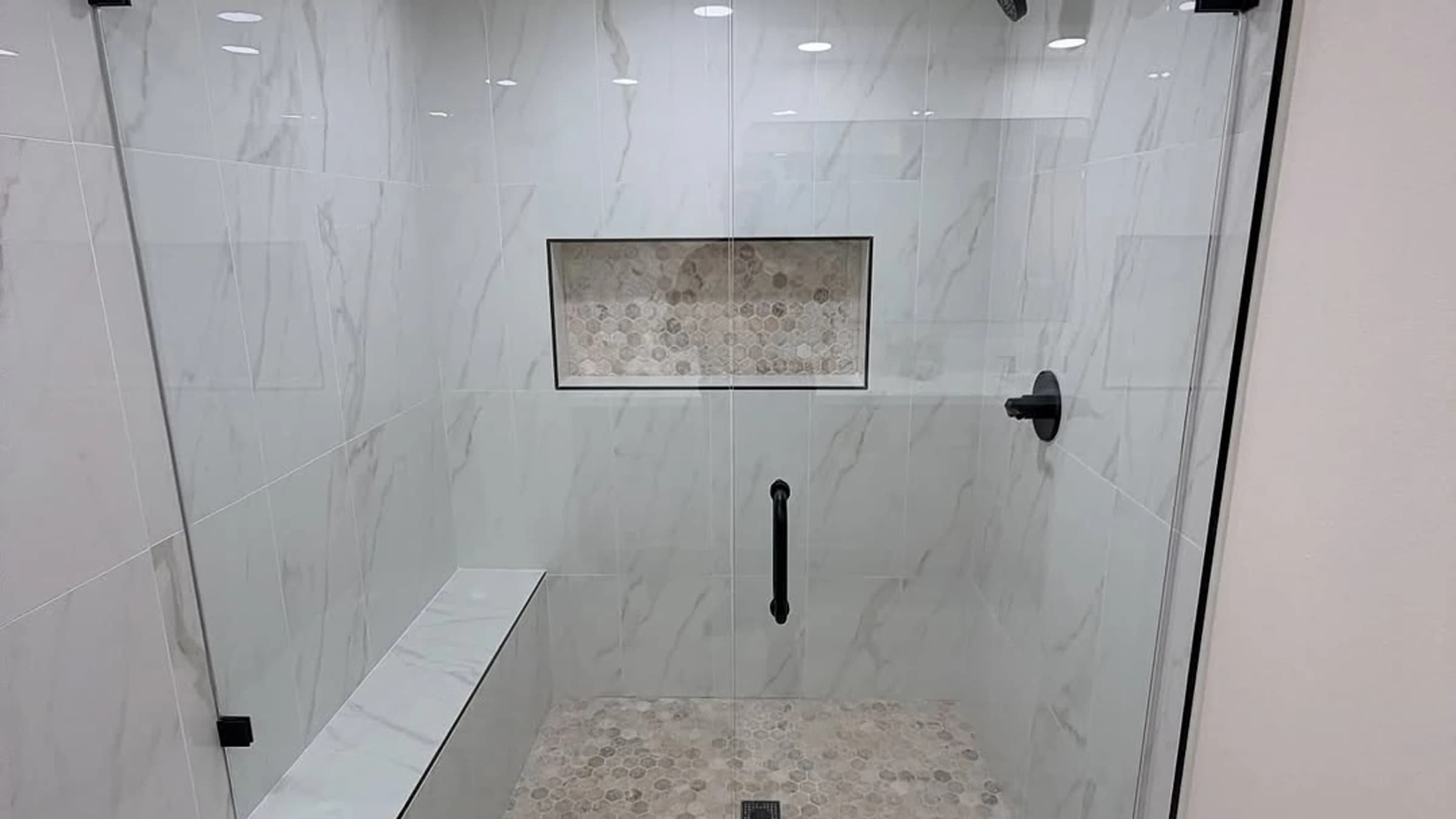
When Tyler homeowners ask about a tub-to-shower conversion, the project usually starts with a simple problem. The tub is hard to step over. The bathroom feels dated. The household rarely uses the bathtub. Someone wants safer entry, easier cleaning, or a shower that works better for daily use.
This guide is for homeowners in Tyler, Longview, and nearby East Texas who are thinking about removing a bathtub and replacing it with a walk-in shower. It is also for anyone planning ahead for aging-in-place, helping a family member use the bathroom more comfortably, or trying to understand why one shower remodel quote in Tyler can vary so much from another.
A good conversion is not just taking out a tub and setting tile where the tub used to be. The work behind the finished surface matters. Plumbing, wall prep, waterproofing, slope, backing, tile layout, glass, and hidden bathroom damage all affect whether the new shower performs the way it should.
What a Tub-to-Shower Conversion Includes
A focused conversion removes the existing bathtub and builds a shower in its place. The project may stay close to the original tub footprint, or it may change the opening, curb, glass, fixtures, or storage details. The final look is important, but the real project starts before anything pretty goes on the wall.
Demolition and haul-off
The old tub, surround, damaged drywall, old backer, and related trim are removed so the real condition of the wall and floor can be seen.
Plumbing adjustments
The drain, valve, shower head, supply lines, and fixture height may need to be adjusted for the new shower layout.
Wall prep and waterproofing
The shower walls need the right backing, seams, corners, fastener details, and waterproofing before tile or panels go in.
Pan, tile, fixtures, and glass
The finished shower may include a prefabricated or tile pan, wall tile, a niche, trim, fixtures, and measured glass.
Depending on the bathroom, the scope can include demo, plumbing adjustments, wall prep, waterproofing, a shower pan or tile pan, tile installation, a recessed niche, updated fixtures, shower glass, trim, cleanup, and a final walkthrough. If the rest of the room also needs work, the conversation may shift from a focused conversion to a larger Tyler bathroom remodel.
If the shower itself is the main priority, Pioneer Construction's Tyler custom shower page shows the type of planning that belongs in a custom shower project in Tyler, Longview, or nearby East Texas.
What Affects the Price
It is not honest to give one exact price for every tub-to-shower conversion without seeing the bathroom. Two bathrooms can look similar from the hallway and still require very different work once the tub is removed. The right estimate depends on scope, materials, site conditions, and what is found behind the existing finishes.
The biggest cost factors usually include:
- Shower size and whether the footprint changes
- Tile type, layout, pattern, trim, and grout selections
- Drain location, valve condition, and plumbing changes
- Shower pan choice, waterproofing system, and wall preparation
- Glass type, door style, fixed panels, and hardware
- Bench, niche, grab bar blocking, shelves, and other built-in details
- Subfloor condition, hidden leaks, old water damage, or previous repairs
A simple acrylic surround, a tiled walk-in shower with glass and niches, and a full custom tile shower are not the same project. Tile selection, drain location, plumbing condition, glass layout, bench details, niche placement, subfloor repair, and the waterproofing system all change the amount of labor and material involved.
Hidden damage can also change the scope. Old tubs sometimes hide rotten subfloor, wet framing, poor previous repairs, or leaks around the drain, valve wall, or toilet area. If the floor already feels soft, the guide on soft bathroom floors in Tyler and Longview explains why that should be addressed before new finishes cover the problem.
When comparing numbers, make sure each quote is pricing the same work. The guide on why bathroom remodel quotes can be so different is useful because the lowest number may leave out waterproofing, glass, fixture allowances, subfloor repair, or finish details that still have to be handled.
For a Tyler-focused breakdown, the guide on what affects shower remodel cost walks through waterproofing, tile, glass, plumbing, pan type, and hidden repair work before comparing quotes.
Why the Cheapest Quote Can Be Dangerous
A low quote is not automatically wrong. Sometimes the scope is smaller, the material selection is simple, or the bathroom is in good condition. The problem is a quote that is cheap because important work is missing. Shower failures usually start with the parts homeowners cannot see.
Tile and grout do not make a shower waterproof by themselves. The walls, seams, corners, fasteners, pan, drain, curb, niche, bench, and valve openings all need to be detailed correctly. If those steps are rushed or skipped, the finished shower can look fine at first and still leak into the wall or floor.
The guide on tile shower waterproofing explains why those behind-the-wall details matter before the tub area is rebuilt as a walk-in shower.
Common failure points include:
- Tile installed over weak backing or poorly prepared walls
- Waterproofing skipped, patched, or handled only at the surface
- Shower pan slope that does not move water to the drain correctly
- Niches, benches, corners, and valve openings detailed poorly
- Drain connections, seams, or transitions left vulnerable to leaks
- Glass openings, curb details, or trim planned too late in the project
A cheap shower can become expensive when water gets behind the tile, glass does not fit correctly, the slope holds water, the curb leaks, or the subfloor starts moving. Pioneer Construction would rather explain the scope clearly up front than make the project sound easier than it is.
If you want the tub area inspected before comparing quotes, Pioneer Construction can look at the bathroom, explain the likely scope, and help you request a clear estimate for work in Tyler, Longview, or nearby East Texas.
How Long It Usually Takes
A tub-to-shower conversion does not have one fixed timeline. The schedule depends on how much demolition is needed, whether plumbing has to move, how fast material selections are finalized, what waterproofing and tile details are included, and whether hidden damage appears after the tub is removed.
Shower glass can also affect timing. In many custom shower projects, the final glass measurement happens after tile is installed because the opening needs to be measured accurately. Fabrication and installation can add time after the shower walls are complete.
Trade coordination matters too. A clean timeline may involve demolition, plumbing, framing or blocking, waterproofing, tile, grout, glass measurement, glass installation, fixture trim, cleanup, and final inspection. Rushing one step can create problems for the next one.
When You Should Keep the Tub
Removing a bathtub is not always the right move. If it is the only tub in the home, homeowners with small children may want to think carefully before replacing it with a shower. Some buyers also like having at least one bathtub in the house, so resale should be part of the discussion if you expect to sell soon.
That does not mean you must keep a tub forever. It means the decision should fit the household, the home, and the long-term plan. Sometimes a safer shower is clearly the better daily choice. Sometimes keeping one tub in the home makes sense while updating a different bathroom.
If you are still comparing the two layouts, the guide on walk-in shower vs. tub-shower combo explains the tradeoffs around daily use, resale, accessibility, cleaning, and whether removing the tub makes sense.
When a Conversion Makes Sense
A tub-to-shower conversion makes sense when the bathtub is not being used, the step-over height feels unsafe, or the bathroom would work better with a shower designed for daily use. A walk-in shower can be easier to enter, easier to clean, and easier to plan with grab bar blocking, a bench, a hand shower, or a lower threshold.
It can also be a smart update when the old tub is leaking, stained, outdated, or taking up space that could be used better. Many East Texas homeowners want a cleaner custom shower, better storage with a niche, brighter tile, better glass, or a layout that feels less cramped than the original tub-and-curtain setup.
The key is to treat the conversion as real construction work, not just a surface swap. The finished shower should look good, but it also needs the right prep, waterproofing, plumbing, slope, support, and finish details behind it.
Planning a Tub-to-Shower Conversion in East Texas
Before removing the tub, get clear on the scope. Decide whether you want a focused conversion, a custom shower, or a broader bathroom remodel that also addresses flooring, vanity, lighting, paint, trim, and old damage at the same time.
A clear estimate should explain what is included, what material choices are assumed, how waterproofing is handled, whether glass is included, how plumbing changes are treated, and what happens if demolition exposes a problem. That is the difference between a number on paper and a real plan for the bathroom.
If you're planning a tub-to-shower conversion in Tyler, Longview, or nearby East Texas, Pioneer Construction can inspect the bathroom, explain the scope, and give you a clear estimate. You can contact Pioneer Construction when you are ready to talk through the project.