
Hardwood Flooring Guide
Different Types of Hardwood Flooring: Which One Is Best for East Texas Homes?
Hardwood flooring is not one single product. Homeowners comparing hardwood should understand the difference between solid hardwood, engineered hardwood, prefinished hardwood, unfinished hardwood, and common wood species before choosing a floor for a home in Longview, Tyler, or nearby East Texas.
A practical hardwood flooring guide for Longview, Tyler, and East Texas homeowners.
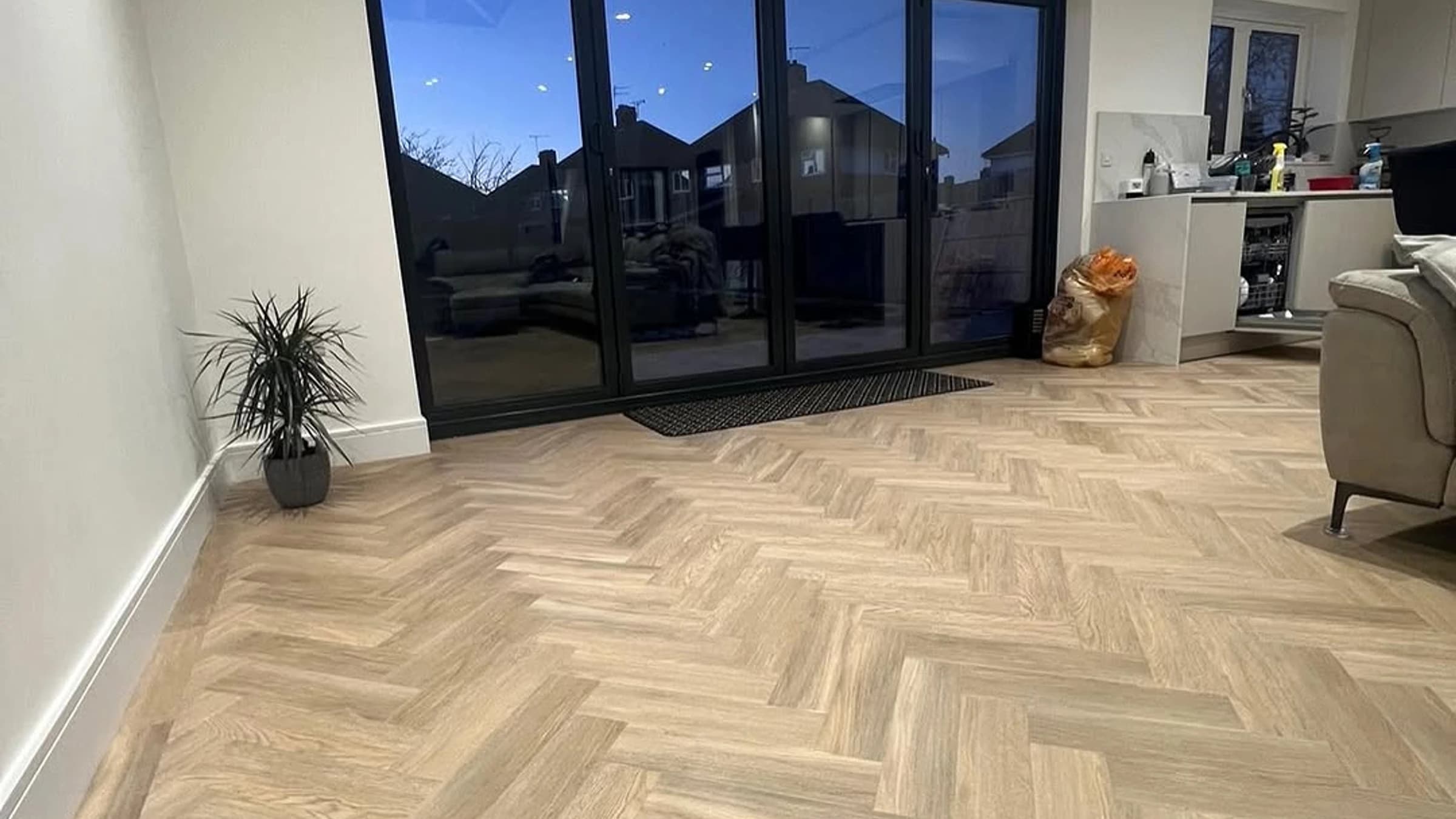
The best hardwood flooring for East Texas homes depends on more than color and plank width. Foundation type, humidity exposure, room use, pets, kids, maintenance expectations, budget, and long-term refinishing goals can all change the right answer.
That is why hardwood flooring in Longview, TX or hardwood flooring in Tyler, TX should be compared around the actual home. A slab home with older flooring layers may need a different plan than a raised-foundation bedroom or a dry home office.
Use this guide with the broader Best Flooring for East Texas Homes article, the LVP vs Laminate Flooring comparison, and the local pages for flooring installation in Longview, TX and flooring installation in Tyler, TX.
Solid hardwood flooring
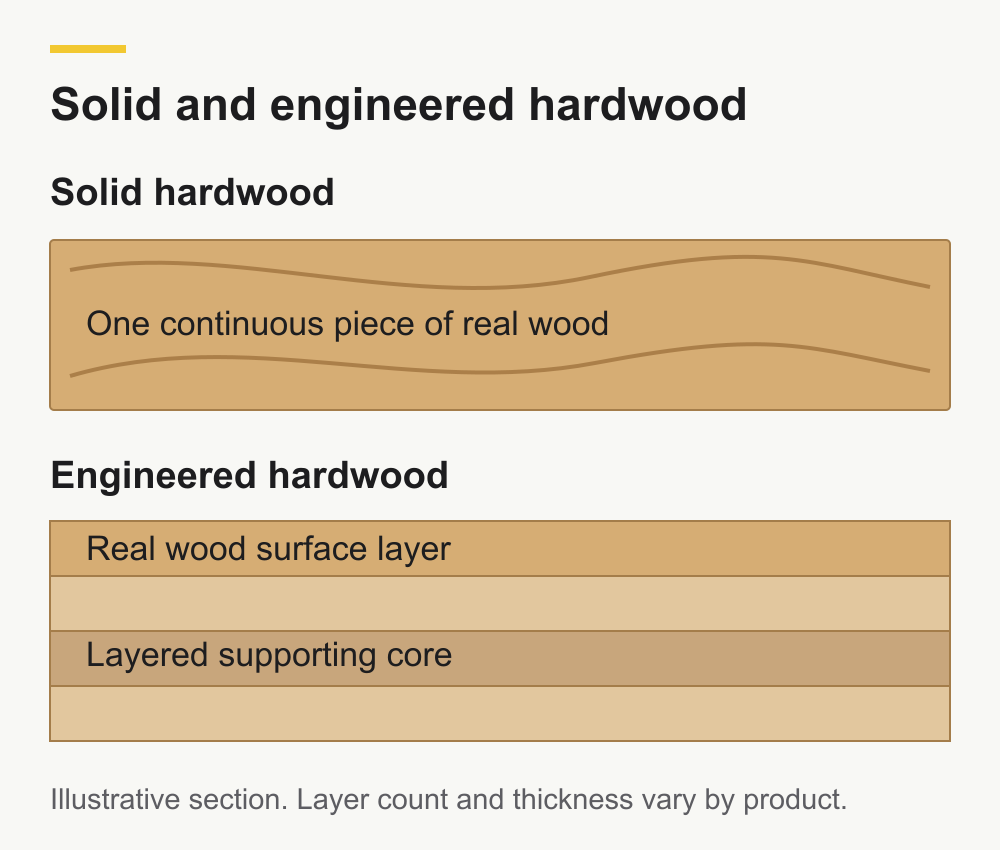
Solid hardwood is made from one piece of real wood. It has the classic hardwood feel many homeowners want, and it can usually be sanded and refinished multiple times when there is enough usable material and the floor has been maintained well.
The tradeoff is sensitivity. Solid hardwood can react more to humidity, moisture, and site conditions. In East Texas, that means the foundation, slab or subfloor condition, existing moisture concerns, and room use should be reviewed before treating solid hardwood as the automatic choice.
Engineered hardwood flooring
Engineered hardwood has a real wood surface layer over a layered core. That construction is why engineered hardwood flooring in Longview, TX is often part of the conversation for slab homes, remodels, and rooms where dimensional stability matters.
Engineered hardwood is typically more stable than solid hardwood in changing humidity conditions, which can make it a practical option for many East Texas homes. It still needs the right product, subfloor prep, installation method, and maintenance expectations. It should not be treated like a wet-room floor.
Prefinished hardwood vs unfinished hardwood
Prefinished hardwood arrives with the stain and protective finish applied at the factory. That can make installation cleaner and faster, and it gives homeowners a consistent factory finish before the material is installed.
Unfinished hardwood is sanded and finished on site. It can give more control over stain color, sheen, and how the floor blends with stairs, trim, or existing hardwood. The tradeoff is more disruption, more site work, and more decisions before the finished look is complete.
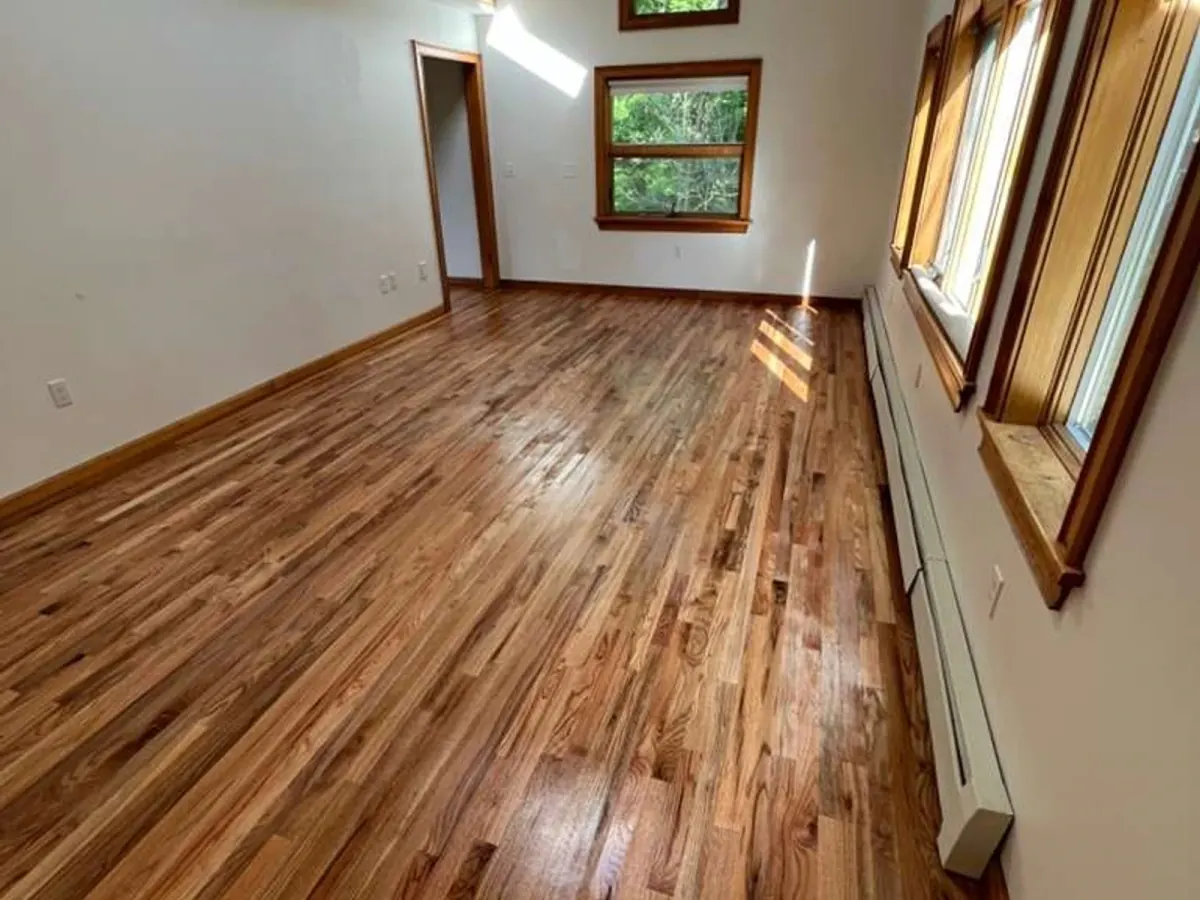
Choosing hardwood for a home in Longview, Tyler, or nearby East Texas? Pioneer Construction can review the existing floor, subfloor, moisture risk, transitions, trim, and installation details before you settle on a product.
Popular hardwood species
Wood species affects color, grain, hardness, and the personality of the finished floor. The right species should match the home, the use of the room, and how much variation the homeowner wants to see every day.
Oak
Oak is a classic hardwood choice because it is durable, familiar, widely available, and works with many stain colors and home styles.
White oak
White oak is popular for modern, neutral, and lighter natural looks. It often feels calmer than red oak and fits many East Texas remodels.
Hickory
Hickory is harder and has more dramatic grain variation. It can be a good fit when the homeowner wants a rustic, bold, or more character-heavy floor.
Maple
Maple has a cleaner and smoother appearance. It can be harder to stain evenly, so finish expectations should be discussed before choosing it.
Walnut
Walnut gives a darker, premium look. It is generally softer than oak or hickory, so room use, pets, furniture, and traffic should be part of the conversation.
Solid hardwood vs engineered hardwood for East Texas homes
Solid hardwood vs engineered hardwood is not a one-winner comparison. Solid hardwood can make sense when site conditions are right and the homeowner values long-term refinishing ability. Engineered hardwood is often worth considering for slab homes and spaces where stability is a larger concern.
The better choice depends on the room, the foundation, the subfloor, the amount of moisture risk, and how the homeowner expects to maintain the floor over time.
| Factor | Solid Hardwood | Engineered Hardwood | What It Means |
|---|---|---|---|
| Construction | One piece of real wood from top to bottom | A real wood surface layer over a layered core | Both are real wood options, but they respond to the home differently. |
| Stability | More sensitive to humidity and site conditions | Typically more stable in changing humidity | Engineered hardwood is often worth comparing in East Texas homes where humidity, slabs, or subfloor conditions matter. |
| Foundation fit | May work well when site conditions support it | Often considered for slab homes and stability-sensitive spaces | The foundation and subfloor should be reviewed before choosing the material. |
| Refinishing | Can usually be sanded and refinished multiple times | Depends on the thickness of the real wood surface layer | Long-term refinishing goals can change the right product choice. |
| Moisture caution | Needs careful planning around moisture exposure | More stable than solid in many conditions, but still needs caution | Bathrooms, laundry rooms, and wet edges need a different level of review. |
Where hardwood flooring works best
Hardwood usually fits best in dry, lived-in rooms where the homeowner wants a real wood floor and understands the maintenance involved. It can work well in living rooms, dining rooms, bedrooms, offices, and selected connected spaces when the product and subfloor support the installation.
Bathrooms, laundry rooms, and moisture-heavy areas need more caution. If the project includes those rooms, compare hardwood against other flooring options and review the flooring installation cost in Longview, TX guide so removal, prep, trim, and transitions are part of the scope.
Living rooms
A strong hardwood candidate when the subfloor is ready and the homeowner wants a warmer real wood feel.
Dining rooms
Often a good fit, especially when transitions to living spaces and kitchens are planned cleanly.
Bedrooms
Usually one of the safer places to consider hardwood because moisture exposure is typically lower.
Home offices
Can work well with the right chair protection, furniture planning, and maintenance expectations.
Connected spaces
May work when layout direction, long runs, transitions, trim, and room-to-room height changes are planned before installation.
Bathrooms and laundry rooms
Need extra caution because plumbing, wet towels, appliance leaks, and repeated moisture can make hardwood a poor fit.
What to ask before choosing hardwood flooring
A good hardwood decision starts with the home, not the display rack. Before choosing a product, ask the questions that affect installation, maintenance, and the finished look.
- Is the home on a slab or a raised foundation?
- Are there pets, kids, heavy traffic, or frequent furniture movement?
- Is the area moisture-prone or connected to exterior doors, bathrooms, kitchens, or laundry rooms?
- Does the homeowner want the option to sand and refinish the floor later?
- What color, grain, and style fit the home instead of only the sample board?
- How much maintenance is realistic for the household?
- How will transitions, trim, doors, thresholds, and connected rooms be handled?
Final recommendation
The right hardwood floor should be chosen around the home, not just the sample board. For East Texas homeowners, the safest decision comes from reviewing the existing floor, subfloor condition, moisture risk, room use, foundation type, and long-term expectations.
Pioneer Construction helps homeowners in Longview, Tyler, and nearby East Texas communities compare flooring options, review existing conditions, and plan the installation details before work starts. Call (903) 364-6195 or use the estimate request page to talk through your home.
FAQs
Hardwood Flooring FAQs
What are the main types of hardwood flooring?
The main hardwood flooring categories homeowners compare are solid hardwood, engineered hardwood, prefinished hardwood, unfinished hardwood, and different wood species such as oak, white oak, hickory, maple, and walnut.
Is solid hardwood or engineered hardwood better for East Texas homes?
It depends on the home. Engineered hardwood is often worth comparing because East Texas humidity, slab foundations, and site conditions can affect flooring decisions. Solid hardwood can still make sense when the foundation, subfloor, room use, and long-term refinishing goals support it.
Can hardwood flooring go in bathrooms or laundry rooms?
Hardwood is usually better for dry living areas, bedrooms, dining rooms, and offices. Bathrooms, laundry rooms, and other moisture-prone rooms need extra caution and may be better suited for another flooring type.
What hardwood species is most popular?
Oak and white oak are common choices because they are durable, familiar, and widely available. Hickory, maple, and walnut can also be good options depending on the look, hardness, grain, and maintenance expectations.
Does hardwood flooring need subfloor preparation?
Yes. Flatness, moisture, old flooring removal, transitions, trim, door clearance, and the condition of the slab or raised foundation can all affect how the finished hardwood floor looks and performs.
Your next step
Ready to compare hardwood flooring with the whole home in mind?
Pioneer Construction helps homeowners in Longview, Tyler, and nearby East Texas communities compare flooring options, review existing conditions, and plan installation details before work starts. Request an estimate or call (903) 364-6195.