
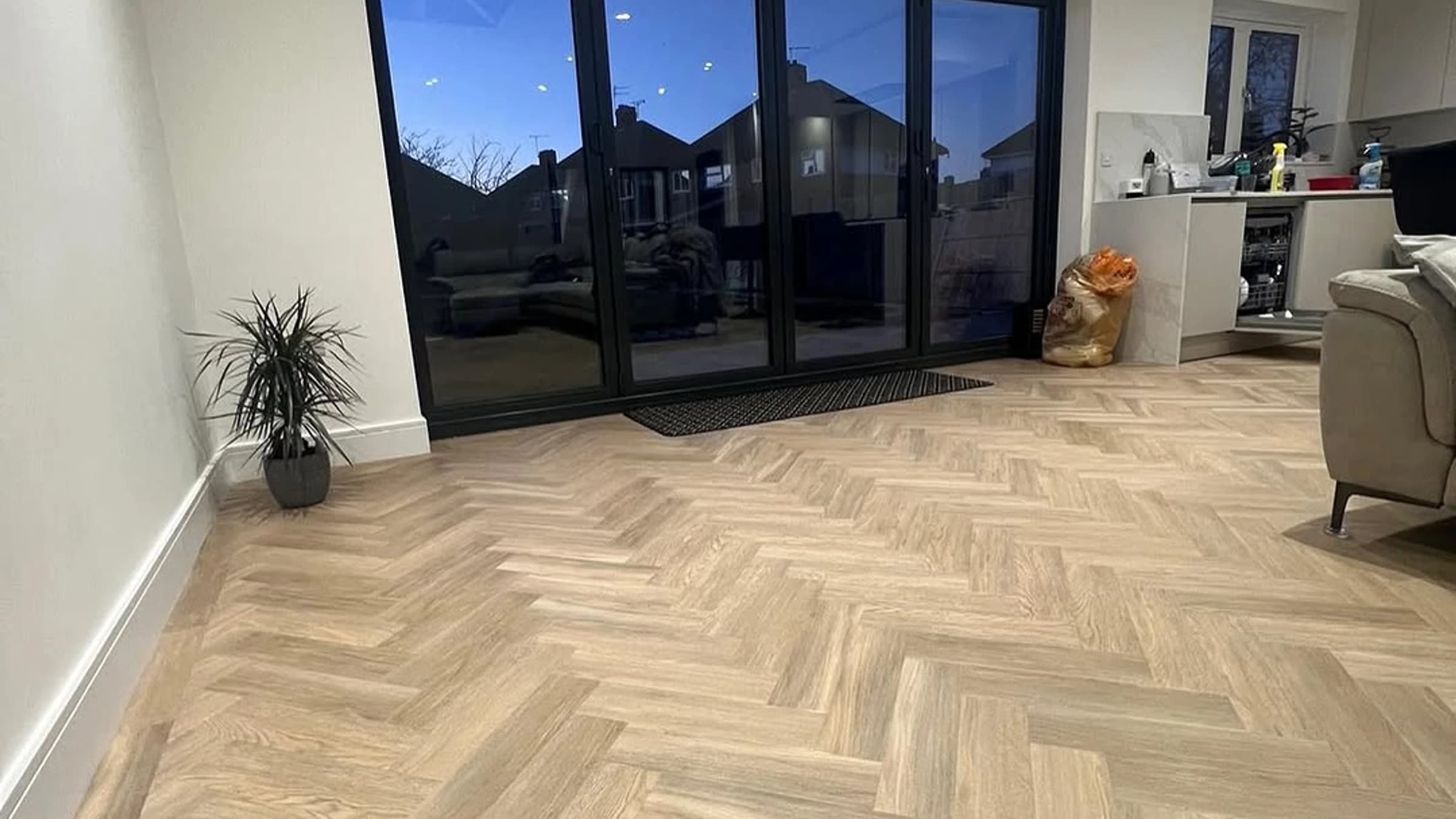
Homeowners comparing LVP vs laminate flooring are usually trying to balance appearance, durability, budget, and the risk of choosing the wrong product for the wrong room. The material matters, but so does the condition of the existing floor and the way each room is used.
Pioneer Construction is not approaching flooring like a showroom sale. Flooring is often tied to real remodeling work: kitchens, bathrooms, laundry rooms, transitions, trim, thresholds, subfloor repairs, and the finished details that decide whether the floor looks clean once the work is complete.
What is LVP flooring?
LVP stands for luxury vinyl plank. It is a vinyl-based plank flooring product made to resemble wood while offering practical resistance to everyday spills and cleaning. Many products use a layered construction with a printed surface, a wear layer, a core, and an attached or separate underlayment depending on the product.
Luxury vinyl plank is often considered for kitchens, laundry rooms, living areas, bedrooms, hallways, and busy households because it can be durable and easier to maintain than some wood-look alternatives. For a deeper LVP planning guide, review luxury vinyl plank flooring installation in Longview, TX.
What is laminate flooring?
Laminate flooring is a manufactured plank product that often uses a wood-fiber core, a visual layer, and a protective top layer. It can give homeowners a wood-look floor with a firm feel underfoot, and many modern laminate products have stronger visuals than older versions.
Laminate can still make sense in dry rooms when the product fits the space and the homeowner likes the look and feel. It needs more caution where moisture, wet shoes, pets, laundry equipment, bathroom edges, or kitchen spills are part of daily life.
Main differences between LVP and laminate
Luxury vinyl plank vs laminate flooring is not only a style decision. The products are built differently, respond to moisture differently, and may feel different underfoot. The installation requirements can also vary by product.
- LVP is vinyl-based, while laminate is built around a wood-fiber core in many products.
- LVP is often more forgiving around everyday water exposure.
- Laminate can offer a firm, wood-like feel in dry rooms.
- Both products need correct subfloor prep and transition planning.
- Both can look poor when trim work, cuts, thresholds, or layout are rushed.
Moisture resistance: kitchens, bathrooms, laundry rooms, and East Texas humidity
Moisture is one of the biggest reasons East Texas homeowners compare vinyl plank vs laminate in Longview, TX. Everyday spills, wet shoes, laundry areas, bathroom edges, kitchen cleanup, pet bowls, and humid seasons can all affect a flooring choice.
LVP is often the safer choice in moisture-prone areas because many products are designed to handle water exposure better than laminate. That does not mean the room can be ignored. Toilets, vanities, tubs, dishwashers, exterior doors, and old water damage still need a careful review before installation.
Laminate may still work in dry spaces, but bathrooms and laundry rooms require caution. Moisture at seams, edges, or beneath the floor can lead to swelling, movement, or a finished floor that fails earlier than expected.
| Factor | LVP | Laminate | What it means for homeowners |
|---|---|---|---|
| Moisture resistance | Often stronger for everyday spills and moisture-prone areas | More sensitive to water at seams and edges | LVP is usually the safer starting point when water exposure is a real concern. |
| Bathrooms/laundry areas | Commonly considered when product requirements and prep support it | Needs caution and may not fit wet-room conditions | Bathrooms, laundry rooms, and nearby spaces need a moisture-aware plan. |
| Kitchens | Practical for spills, appliances, and connected rooms | Can work in some kitchens with careful product selection | Kitchen flooring should account for cabinets, appliances, toe kicks, and transitions. |
| Pets/kids | Often handles busy households and cleanup well | Can perform well in dry areas but may be less forgiving with liquid accidents | Traffic, claws, toys, and spills should shape the material choice. |
| Comfort | Can feel resilient underfoot depending on product and underlayment | Can feel firm and wood-like, but sound depends on underlayment and subfloor | The feel of the finished floor depends on the full assembly, not only the top surface. |
| Subfloor sensitivity | Needs a flat, clean, stable surface | Also needs a flat, stable surface to avoid movement and noise | Neither option hides bad prep work. |
| Cost planning | Material cost varies by product quality and installation method | May look less expensive up front in some products | Removal, prep, trim, transitions, and room details can matter as much as plank price. |
| Finished look | Wood-look styles with practical moisture performance | Often strong visuals and texture in dry rooms | The finished result also depends on layout, cuts, transitions, and trim. |
| Best use case | Kitchens, laundry rooms, busy households, and moisture-aware remodels | Dry bedrooms, offices, living areas, and spaces where the product fit is right | The best flooring for East Texas homes depends on the room and existing conditions. |
Durability for pets, kids, and busy households
Pets, kids, furniture, shoes, toys, and daily traffic all change the flooring conversation. LVP is often a practical fit for busy households because many products handle spills and cleaning well, but homeowners still need to compare wear layer, texture, product thickness, and room use.
Laminate can also be durable in dry rooms. It can resist some scratches and wear, but liquid accidents and moisture near seams may be a bigger concern. The better choice depends on the actual household, not a material label on a box.
Comfort, sound, and feel underfoot
LVP and laminate feel different. Some LVP products feel more resilient, while laminate can feel firmer and more wood-like. Sound also depends on the product, underlayment, room size, subfloor, and how the floor is installed.
A floor can sound hollow, click, or move if the surface beneath it is not prepared correctly. That is why the full assembly matters: existing flooring, subfloor, underlayment, product requirements, transitions, and the edge details around the room.
Appearance and resale perception
Both products can provide a wood-look floor, but appearance is not only about the plank surface. Layout direction, repeated patterns, cuts around doors, trim quality, threshold placement, and transitions to nearby rooms affect whether the finished floor feels intentional.
Some homeowners prefer the visual texture of laminate in dry spaces. Others prefer the moisture performance of LVP in kitchens, laundry rooms, and connected living areas. Resale perception often follows the quality of the finished work as much as the material choice.
Installation considerations
LVP and laminate both need a plan before installation starts. Product requirements may differ for underlayment, expansion spacing, room size, transitions, and acceptable subfloor flatness. Door jambs, closets, hallways, stairs, cabinets, and appliances can also affect the work.
This is where a remodeling contractor looks at more than the box of flooring. Pioneer Construction considers how the flooring connects to bathrooms, kitchens, living areas, trim, thresholds, and finished details. Homeowners comparing project scope can also read about flooring installation cost in Longview, TX.
Subfloor prep and why it matters for both options
Neither LVP nor laminate will look right over a poor subfloor. Uneven slabs, soft areas, loose panels, old adhesive, damaged underlayment, moisture concerns, and floor-height changes can all affect the finished installation.
Prep work may include removal, scraping, fastening, replacing damaged sections, addressing low spots, checking moisture concerns, and planning transitions. That prep is part of flooring installation in Longview, TX, not an optional detail to think about after the product is selected.
- Existing flooring type and removal requirements
- Subfloor flatness, soft spots, slab condition, and moisture concerns
- Floor height at tile, carpet, doors, stairs, and adjoining rooms
- Baseboards, shoe molding, casing cuts, thresholds, and transition strips
- Cabinets, appliances, vanities, toilets, islands, and built-ins
- Product requirements for underlayment, expansion space, and installation method
Choosing between LVP and laminate for a home in Longview, Tyler, or nearby East Texas? Pioneer Construction can review the existing floors, check subfloor and transition details, and help you choose the flooring option that fits the room.
Cost considerations without giving fake exact pricing
Material price is only one part of the project. The same room can price differently depending on removal, disposal, subfloor prep, underlayment, floor height changes, trim, thresholds, transitions, appliances, toilets, vanities, and the number of connected rooms.
Laminate may appear less expensive in some product comparisons. LVP may make more sense when moisture risk or long-term room use changes the decision. The real question is not only which plank costs less; it is which floor fits the room and what the whole installation requires.
Where LVP usually makes more sense
LVP usually deserves a closer look in kitchens, laundry areas, entry spaces, pet-heavy homes, busy households, and rooms where water resistant flooring in Longview, TX is part of the goal. It can also be a strong fit when homeowners want one surface to connect several rooms.
If flooring is being planned with kitchen remodeling in Longview, TX, LVP may help simplify transitions around cabinets, appliances, pantry areas, and connected living spaces. The product still needs to match the subfloor and installation requirements.
Where laminate may still make sense
Laminate may still make sense in dry bedrooms, offices, living rooms, or other spaces where the homeowner likes the feel, visual detail, and product value. It can be a reasonable option when moisture exposure is limited and the subfloor is ready.
The caution is placement. Laminate near bathrooms, laundry rooms, exterior doors, or kitchens should be reviewed carefully. A good flooring choice respects how the room is actually used.
Which option should East Texas homeowners choose?
East Texas homeowners should choose the product that fits the room, not the product that sounds best in a comparison chart. If moisture, pets, kids, cleaning, and connected kitchens or laundry rooms are major factors, LVP is often the safer direction. If the room is dry and the homeowner wants a firmer wood-look feel, laminate may still belong in the conversation.
The best flooring for East Texas homes depends on the existing floor, subfloor condition, room layout, household use, budget range, and finish expectations. Pioneer Construction helps homeowners compare those details before the project turns into a material-only decision.
When to request a flooring estimate
Request an estimate when you are choosing between LVP and laminate, replacing flooring in more than one room, seeing uneven areas, planning work near moisture-prone spaces, or trying to understand trim and transition details.
Bathroom areas need special attention because toilets, vanities, tubs, showers, old leaks, and soft subfloor can affect the flooring plan. When flooring ties into bathroom remodeling, the flooring should be reviewed as part of the room.
Compare flooring options for your project
If you are comparing luxury vinyl plank vs laminate flooring for a home in Longview, Tyler, or nearby East Texas, Pioneer Construction can review the existing floors, check subfloor and transition details, and help you choose the flooring option that fits the room.
Send a project request through the estimate request page and share the rooms involved, what flooring you are comparing, and whether the project connects to bathrooms, kitchens, laundry areas, or other remodeling work.