
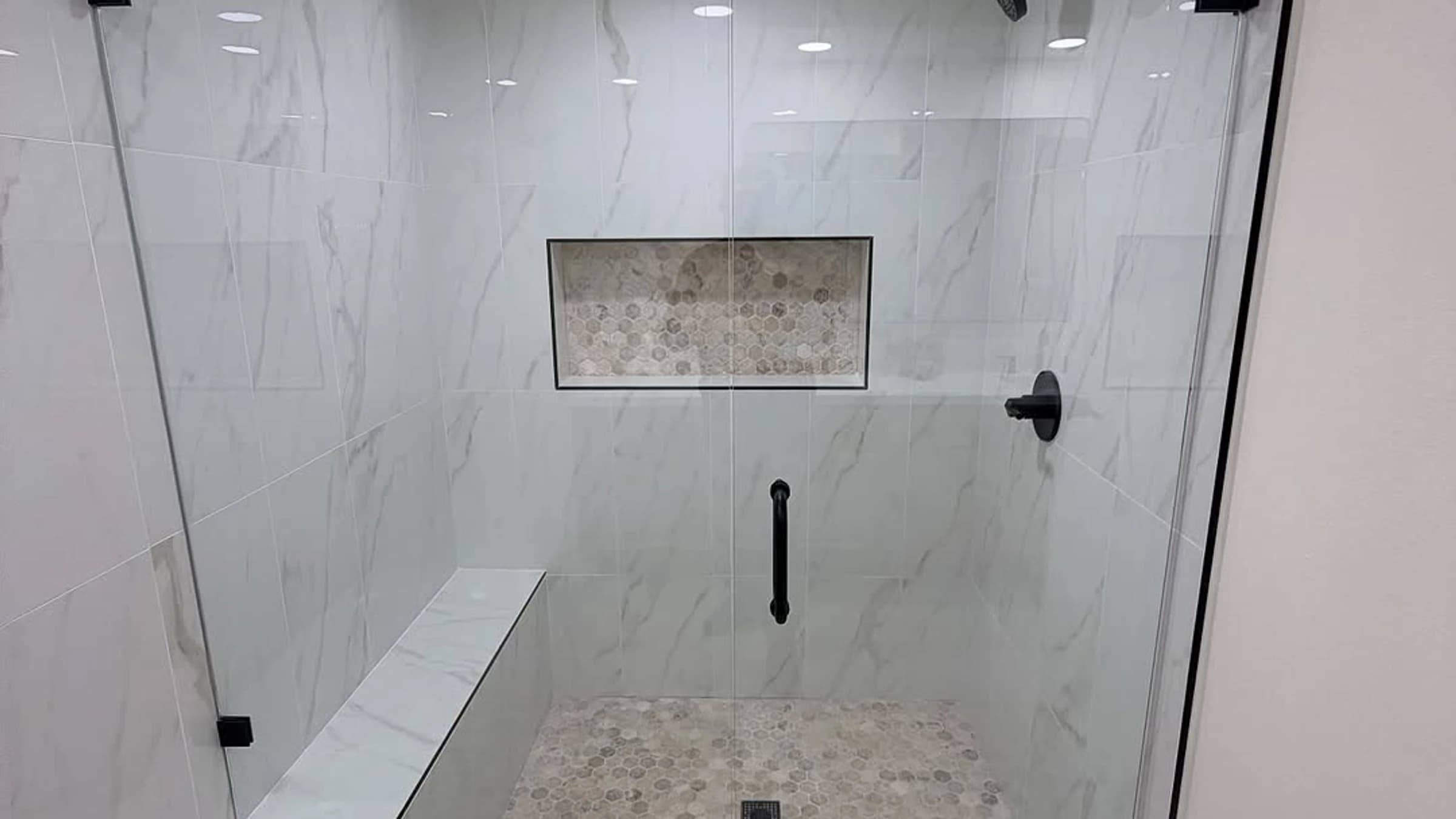
Homeowners often start a shower project by looking at tile color, grout, and glass styles. Those choices matter, but a custom tile shower is built from the inside out. The work behind the finished tile affects how the shower performs, how clean the finished layout looks, and how well the bathroom holds up over time.
For homes in Longview, Tyler, and nearby East Texas communities, the right shower plan usually depends on the existing bathroom, the condition behind the walls, the plumbing layout, the tile pattern, and how the homeowner wants the space to work every day. Pioneer Construction helps homeowners compare those details before work begins. For a broader local project overview, the Longview bathroom remodeling guide covers how custom showers can fit into a full bathroom plan.
A Custom Tile Shower Starts Behind the Walls
A custom shower is not just tile set on a wall. The framing, wall prep, substrate, plumbing, shower valve, drain, corners, seams, and transitions all need to be considered before the finished materials go in. If the bathroom has old leaks, soft flooring, damaged framing, or previous DIY work, those items may affect the scope.
This is why an in-person review matters. The finished tile should look clean, but the project also needs a practical plan for what is behind it. Homeowners comparing shower options can start with the custom shower service page and the custom showers in Longview guide.
Waterproofing Matters More Than the Tile
Tile and grout are not the waterproofing system by themselves. Shower failure usually starts behind the tile, where water reaches areas that were not properly prepared or protected. Proper waterproofing is critical because the finished surface can look fine while hidden problems are beginning behind it.
Wall prep, slope, corners, seams, penetrations, drains, and transitions should be discussed before installation begins. A good shower plan should explain how the wet area will be prepared, not just which tile will be installed. Rushed shower work can miss the steps that matter most because those steps are not always visible at the end.
Tile Size and Layout Affect the Final Look
Tile selection affects more than color. Large-format tile can create a cleaner look with fewer grout lines, but it often needs flatter walls and careful layout planning. Small mosaic tile can work well in shower floors and accents, but it may involve more grout and detail work.
Herringbone, vertical stack, decorative patterns, borders, and feature walls can all affect labor and layout. The goal is to plan cuts, corners, edges, niches, benches, and transitions before tile starts going up. That planning helps the shower look intentional instead of pieced together.
Niches, Benches, and Shelves Need to Be Planned Early
Built-in niches, benches, shelves, grab bar blocking, and fixture placement should be discussed before installation begins. These details affect framing, waterproofing, tile layout, and daily use. Moving them after work starts can add complexity.
Think through where shampoo bottles, soap, razors, towels, seating, handheld shower fixtures, and grab bars may belong. Even if grab bars are not being installed immediately, blocking may be worth discussing during the planning stage. The walk-in shower planning guide covers more daily-use details for shower layouts.
The Drain Location Can Affect the Scope
Drain placement matters. Keeping a drain in the same location may keep the project more focused, but some shower layouts work better with a drain change. Moving a drain or changing plumbing can affect scope, cost, and timeline because it may involve subfloor work, plumbing access, slope changes, and additional coordination.
The same is true for shower valves, body sprays, handheld fixtures, and tub-to-shower changes. If you are replacing a tub with a shower, the tub-to-shower conversion guide and the article comparing shower conversions with full bathroom remodels can help frame the scope.
Shower Glass Is Usually Measured After Tile Is Complete
Shower glass is often one of the last visible pieces of a custom shower. In many projects, final field measurements happen after tile is complete because the finished opening needs to be measured accurately. That means the glass may not be installed the same day the tile work finishes.
Glass type, door swing, fixed panels, hardware finish, curb details, and clearances should still be discussed early. The final measurement may come later, but the plan should not be an afterthought. Homeowners in Tyler can also review the Tyler custom shower guide for similar planning considerations.
Cheap Shower Work Can Become Expensive Later
A lower quote is not automatically a problem if the scope is smaller and clearly explained. The concern is a quote that leaves out waterproofing, wall prep, trim details, shower glass, cleanup, final finish expectations, or how hidden damage will be handled.
Cheap shower work can become expensive later if water gets behind the tile, the slope is wrong, glass was not planned correctly, or important details are treated as change orders after work begins. A practical quote should explain what is included, what is excluded, and what may depend on the existing bathroom. The guide on bathroom remodel mistakes that cost more later covers more ways unclear scope can create problems. For broader budget planning, review the Longview bathroom remodel cost guide.
Questions to Ask Before Starting a Custom Tile Shower
Before choosing a contractor, ask clear questions about waterproofing, prep, tile layout, glass, plumbing, and hidden conditions. The answers should help you understand the work, not just the price.
- What waterproofing method will be used behind the finished tile?
- What is included in wall prep, slope, corners, seams, trim, and cleanup?
- Will the tile pattern require extra layout planning or specialty trim?
- Where will niches, benches, shelves, grab bar blocking, and fixtures be placed?
- Does the project require drain relocation, valve changes, or other plumbing work?
- How will shower glass be measured, ordered, and installed after tile is complete?
- How will hidden damage, old plumbing, or previous DIY work be handled if found?
Planning a Custom Tile Shower in Longview or East Texas?
If you are planning a custom tile shower in Longview, Tyler, or nearby East Texas communities, Pioneer Construction can help you think through waterproofing, layout, tile, niches, benches, drains, glass, and the condition of the existing bathroom before work begins.
A custom shower can be a focused update or part of a larger bathroom remodeling project. If timing is one of your main questions, the guide on bathroom remodel timelines explains why shower work, materials, plumbing, glass, and hidden damage can affect the schedule.