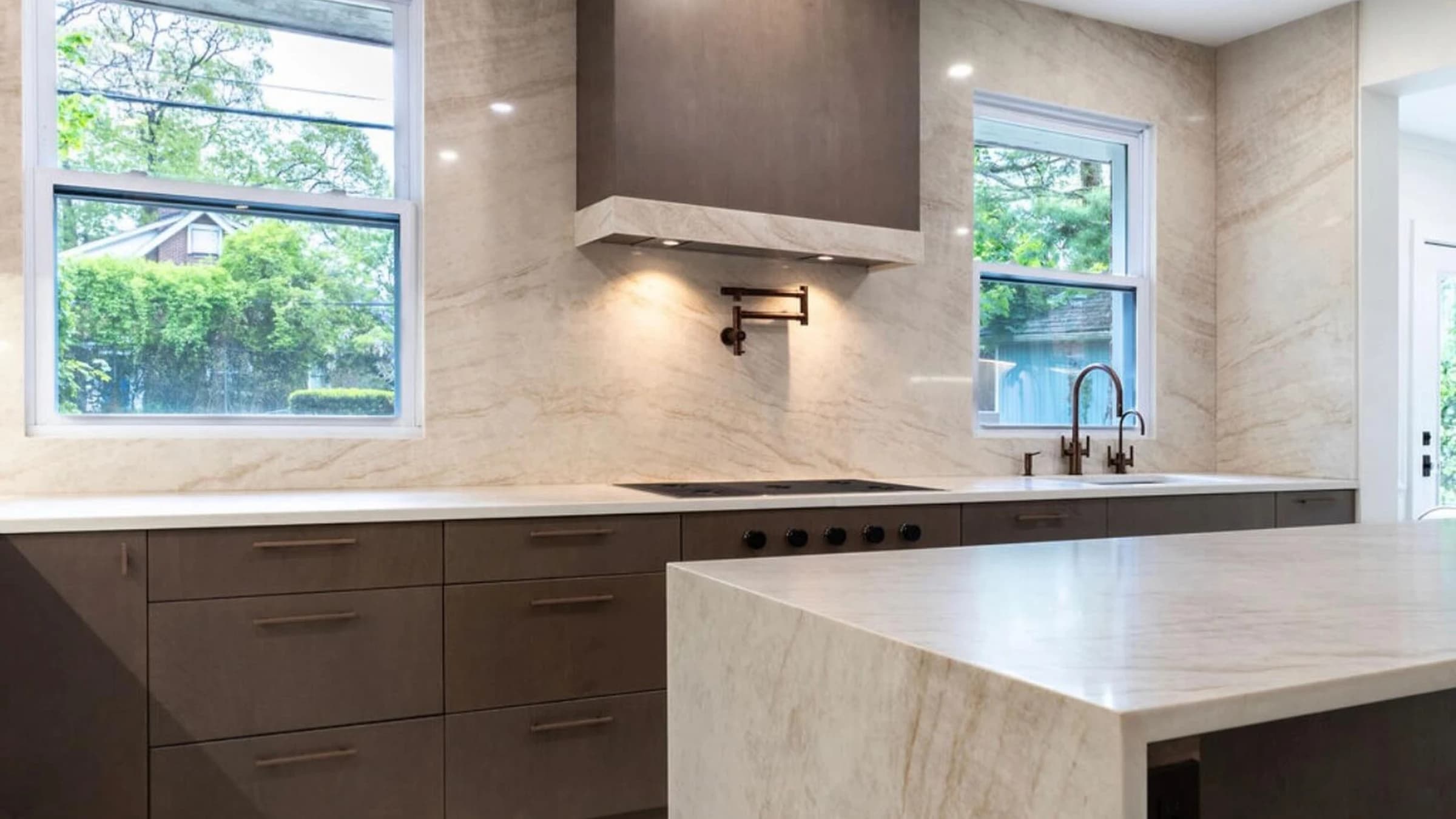
How do layout changes affect kitchen remodel cost?
Keeping the sink, range, refrigerator, island, and major work zones in the same general place can simplify the scope. Moving walls, widening openings, relocating plumbing, changing appliance locations, or rebuilding the room around a new footprint usually adds planning, labor, trade coordination, and repair work.
How does cabinet work affect the estimate?
Cabinet scope can range from selected repairs, hardware, paint, and storage adjustments to full cabinet replacement or custom cabinet work. The estimate changes with cabinet condition, box layout, door style, finish details, trim, hardware, pantry needs, and how the cabinets meet flooring, countertops, appliances, and walls.
Why does countertop material matter?
Countertops affect material selection, measurements, sink fit, seams, edge details, support, backsplash planning, and appliance clearances. A heavier or more premium surface can require different coordination than a simpler material, especially around islands, corners, walls that are not square, and existing cabinet conditions.
How can backsplash change the scope?
Backsplash work depends on tile choice, layout, grout, height, outlet cuts, edge trim, wall prep, and how the tile meets cabinets, countertops, windows, and lighting. A small, simple backsplash is different from detailed tile work with patterns, niches, shelves, or many cuts.
Why does kitchen flooring affect remodel price?
Kitchen flooring has to work around cabinets, islands, appliances, dishwasher clearance, toe kicks, transitions, subfloor condition, and connected rooms. If flooring continues into dining, hallway, laundry, or living areas, the project needs a broader plan than a single-room surface swap.
How does lighting affect the estimate?
Lighting can include ceiling fixtures, recessed lighting, task lighting, under-cabinet lighting, switches, dimmers, and fixture placement. Adding lighting or changing locations can involve electrical work, ceiling access, wall repair, and finish coordination.
Why do plumbing fixtures matter?
Sink, faucet, disposal, dishwasher, shutoff, drain, and water line details can all affect the work. Swapping a faucet is not the same as moving a sink, changing a dishwasher location, or correcting old plumbing found during demolition.
When do electrical updates change the price?
Electrical updates can involve outlets, switches, lighting, appliance needs, GFCI protection, circuits, wall repair, and code-related corrections. Older kitchens may need more review before new finishes are installed.
Why does demolition matter?
Demolition is affected by the existing cabinets, flooring, backsplash, wall materials, old adhesive, previous repairs, haul-off, dust control, and protection for nearby rooms. The estimate should be clear about what is being removed and what happens after the room is opened up.
How do subfloor or wall repairs affect cost?
Older homes can reveal soft subfloor, uneven floors, damaged drywall, previous water damage, out-of-square walls, or old layers under the finish materials. Repairs are not decorative, but they can be necessary before cabinets, flooring, backsplash, or countertops are installed correctly.
Why does appliance fitment need planning?
Appliance fitment affects dishwasher clearance, refrigerator openings, range placement, ventilation, water lines, outlet locations, cabinet spacing, and finished floor height. A new appliance can create extra work if the surrounding space was built for a different size or layout.
How do finish details affect the final number?
Finish details include trim, paint, hardware, caulk lines, transitions, touchups, fixture finishes, cabinet pulls, backsplash edges, and the way the kitchen meets nearby rooms. These details are easy to overlook, but they are part of a kitchen that looks complete.